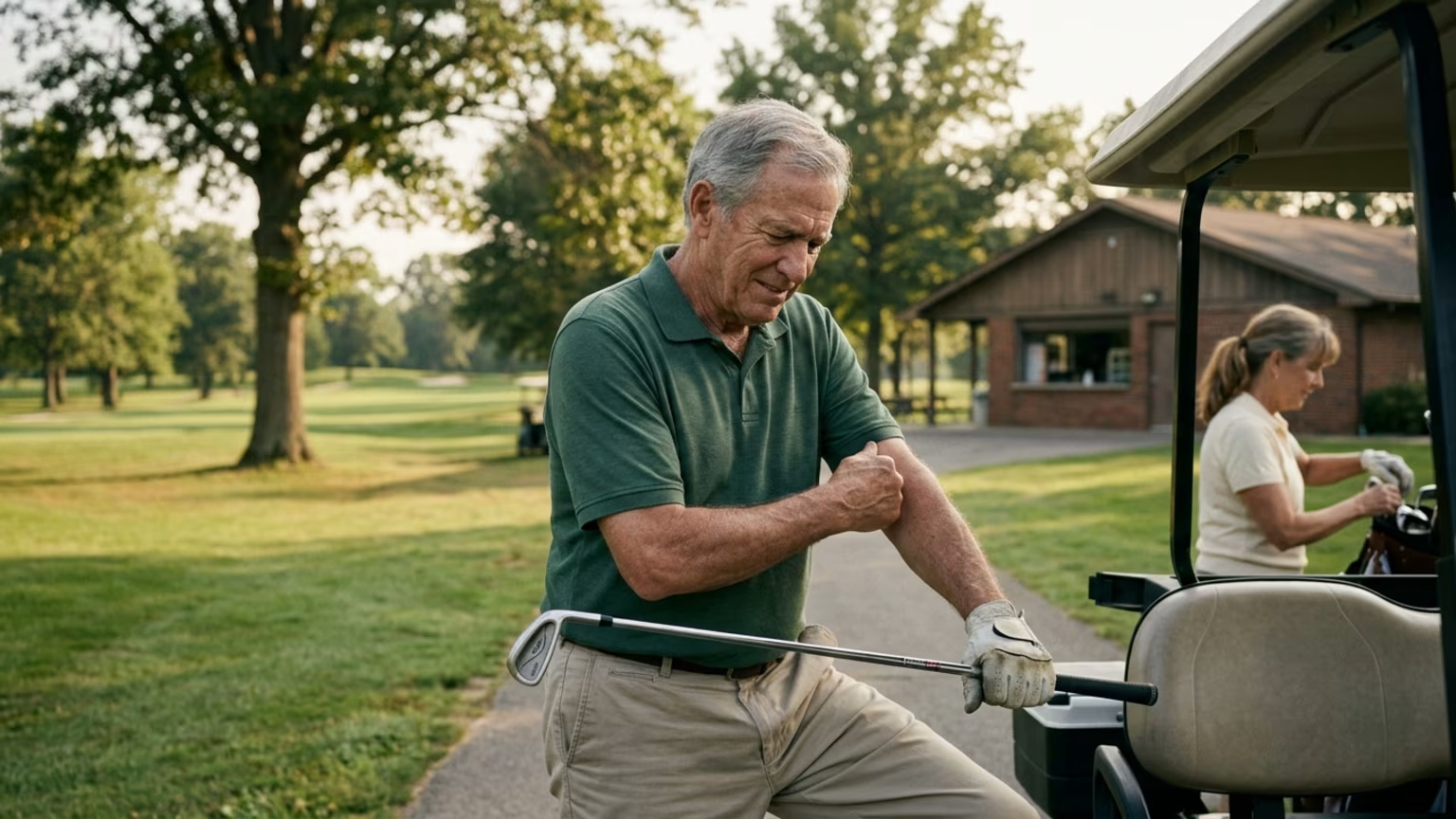

A 2026 systematic review reveals that strength and power training improve golf clubhead speed more effectively than flexibility alone for players over 40.




A 2026 systematic review and meta-analysis of 33 studies involving 798 participants revealed a striking reality about golf performance. In controlled studies, targeted physical training produced average improvements of 1.05 metres per second in clubhead speed. This research from Sports Medicine shows that physical preparation can directly improve your swing without requiring a technical overhaul. The data proves that building a more capable body is often the most effective equipment upgrade available.
Golf media has spent decades convincing amateur players that flexibility is the ultimate secret to speed. We often see players forcing themselves into painful stretches before the first tee. They bend and twist in hopes of matching the massive shoulder turns seen on television. However, the 2026 review reported that flexibility was not significantly associated with clubhead speed in the pooled analysis.
Instead, the reported pooled correlations were 0.51 for upper-body power, 0.46 for lower-body strength, 0.41 for upper-body strength and 0.38 for lower-body power. This means that clubhead speed relies heavily on how quickly and forcefully your muscles can contract. Flexibility remains highly valuable for maintaining comfortable movement options. You need enough mobility to turn and load your legs without experiencing pain.
It simply acts as the pathway for your strength rather than the engine of the swing itself. Golfers who want to maintain their clubhead speed without swinging harder need to prioritise strength and explosive qualities over static stretching. Upper-body explosiveness and lower-body power are meaningful correlates of clubhead speed for older amateurs. Usable golf speed depends on how quickly force can be expressed through your body.
Ball speed directly controls how far your shots travel in the air. The controlled studies showed average improvements of 2.20 metres per second in ball speed. Those ball speed gains translated into average improvements of 9.33 metres in carry distance and 10.55 metres in total distance. These numbers highlight the direct relationship between physical conditioning and the distances you see on the golf course.
Speed generation relies heavily on proximal-to-distal movement. This biomechanical concept explains how force transfers from the center of your body to your outer limbs. Research confirms this is a very useful model for understanding power. The literature does not establish one universally correct swing sequence for every golfer.
Your goal is simply to develop a coordinated transfer of force rather than copying a rigid sequence. Hitting longer drives requires a combination of muscular control and smart sequencing. You cannot buy these physical qualities off a retail shelf. Training your body is the only proven method to build sustainable power.
The saddest thing I have seen in golf is watching lifelong playing partners slowly drop out of our weekend group. It usually starts with a nagging shoulder or knee issue they ignore until it requires surgery. That pattern is exactly why I became obsessed with golf longevity. We do not have to stop playing as we age, provided we do the right maintenance work between rounds.
Older players often lose power because they stop training their muscles to move quickly. A 2007 study by Thompson, Cobb and Blackwell examined a functional training approach in older golfers. The study used an older-golfer population and combined flexibility, core-stability, balance and resistance exercises rather than treating flexibility as the sole performance target. Secondary summaries describe 18 older male golfers averaging approximately 70 years old.
These men reported a nearly 4-mph improvement in maximum clubhead speed after eight weeks of training. Small sample sizes mean this result should be treated cautiously. It still provides a brilliant example of how targeted physical work benefits mature players. We cannot swing like 20-year-old athletes forever.
We can absolutely build a resilient body that supports an age-proof approach to distance. Reversing the decline of clubhead speed requires a balanced and low-impact training intervention. You should treat mobility as access rather than your main source of power. Prioritise your hips, thoracic spine and ankles based on your actual movement restrictions.
Train basic strength two or three times per week using squats, hip hinges and rows. These compound movements teach your muscles to fire together in a coordinated sequence. When you return to training, always begin with a manageable load and stop before you reach exhaustion. Your objective is building functional capacity rather than trying to win a powerlifting competition.
Once you establish good control, you can begin adding simple power exercises. Medicine-ball chest passes and light rotational throws are excellent choices. Keep instructions focused on one small movement at a time, such as focusing entirely on turning your trail hip. This targeted coordination can yield impressive results without straining your joints.
In one 2026 intervention, researchers examined a rhythmic foot-propulsion program. They reported mean increases of 0.79 metres per second in club speed and 0.95 metres per second in ball speed. Using the ground effectively is a vital skill for older golfers. Our lower body provides the stable foundation needed to swing the club rapidly.
You must learn to push into the turf to generate vertical force. This upward push translates directly into rotational speed and higher clubhead velocities. A shorter backswing is another excellent mechanical adjustment. A compact swing can preserve usable speed without demanding extreme spinal rotation.
A conservative weekly training pattern might look like this:
This schedule provides a practical framework for older golfers. It separates your strength training from your fast swing days to protect your joints. Recovery becomes incredibly vital as we progress through our forties and fifties. Muscle tissue needs adequate rest to repair and grow stronger between your workout sessions.
Overtraining can lead to persistent inflammation and a noticeable drop in your swing speed. Listening to your body is the smartest strategy for maintaining long-term performance. The ultimate goal is pursuing more swing speed without pain.
Chasing the yardage stats of elite athletes is a recipe for physical disaster. The pooled standardised effects in the 2026 review ranged from 0.38 to 0.62. This suggests small-to-moderate overall effects rather than a guarantee of a dramatic transformation for every single golfer. An extra 10.55 metres of total distance is an average finding from controlled environments.
It should never be viewed as a rigid promise for your individual game. You should set healthy and realistic benchmarks based on your current physical condition. Track your average driver clubhead speed over a consistent number of smooth swings. Pay close attention to your next-day soreness and your ability to finish a round without fatigue.
Progress by adjusting only one major variable at a time, such as your training load or your swing intensity. If you experience persistent joint pain, immediately reduce your workload and seek professional assessment.
Numbers never lie: preserving mobility and strength is the ultimate equipment upgrade. You can maintain your speed by following an age-aware plan that prioritises muscle control over extreme flexibility. Physical training improves your performance baseline without requiring a technical swing overhaul. The data proves that a stronger body creates a more resilient golf swing.
Follow Golfergy for practical insights on performance, mobility, recovery and healthy ageing. Stay connected for new articles, research-led guidance and ideas to help you play better for longer.



Learn how restricted hip and thoracic mobility impacts your golf swing after 40. Review practical daily routines and expert insights to protect your lower back.


When your golf scores stall, a swing overhaul is rarely the answer. Learn why smarter course management and physical preparation beat swinging harder.

A breakdown of the Golfweek downswing transition lesson for golfers over 40. Learn the biomechanics of starting the hands down first to protect aging joints.
Explore practical resources on performance, recovery, mobility and golf longevity.
Read the Blog