
Learn when to modify your golf swing, stop playing, or seek medical help with our practical mid-round pain protocol for golfers over 40.




You have heard a million times that mid-round back pain just means you need to adjust your swing mechanics to play through it. The truth according to orthopedic guidance is completely different. Golfers frequently treat physical pain as a simple swing fault to be solved with better technique. They assume they can just correct their posture and safely continue playing until the round is over.
Medical experts warn that this approach is flawed. The smartest move is not self-diagnosis on the fairway. It is knowing exactly when to ease up, when to stop completely and when to seek professional care.
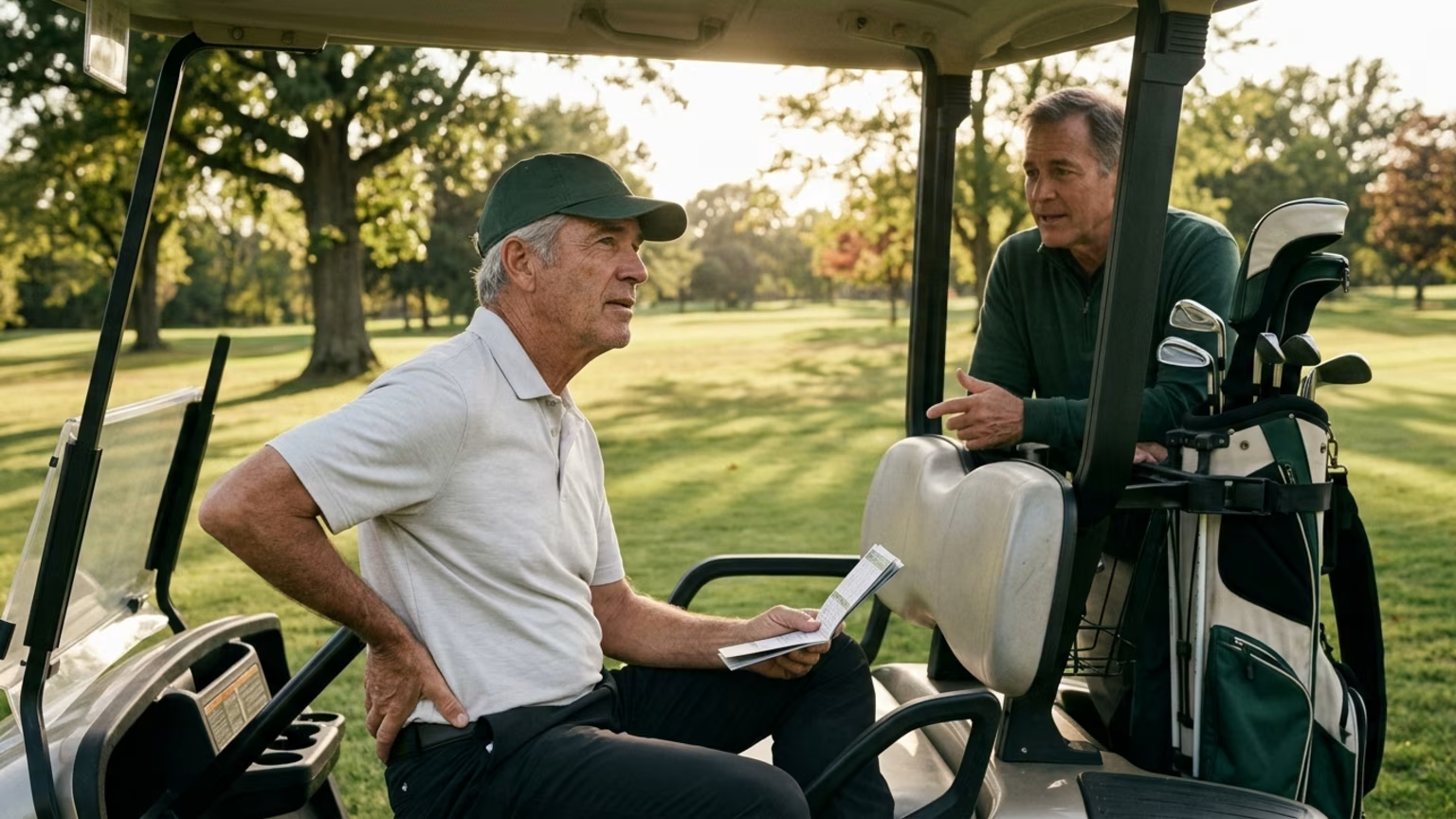
It is easy to understand why players try to invent a mechanical solution for a physical problem. Golf relies heavily on repetition and precise body movements. When your lower back stiffens after a drive, it feels natural to blame your follow-through. Most of us just grab a shorter iron and try to hit through the discomfort.
This stubbornness comes from a good place. Nobody wants to quit on the seventh hole and ruin a weekend round with friends. We want to believe that a smoother tempo will magically relieve the pressure on our joints. We assume a minor adjustment will solve the problem.
Unfortunately, using an iron instead of a driver might reduce immediate demand for some golfers. No cited source establishes that a particular club reliably prevents injury or makes play safe. Players often compound the issue by mismanaging their return to the course.
Orthopedic guidance recommends building playing volume gradually after an off-season or layoff. A safe return might begin with a shorter session or nine holes before returning to full 18-hole rounds on consecutive days. Most players ignore this advice. They jump straight into demanding range sessions and long walking days.
Orthopedic guidance explains why playing through pain with a makeshift swing is a bad idea. Golf injuries are often associated with repetitive rotational loading through the lower back, shoulders, hips and knees. A recent review from the Japan Health Golf Promotion Organization cites a 2024 systematic review and meta-analysis.
This study estimated 2.5 injuries per 1,000 rounds overall and 1.3 per 1,000 rounds among amateurs. Because these event rates seem relatively low, many players underestimate the importance of responding to symptoms early.
The problem with diagnosing yourself mid-round is that pain is not a reliable diagnostic instrument. The location of the pain does not always identify the source of the problem. A sudden ache might feel like a back issue, but the relevant load may actually involve whole-body movement patterns.
A report in The Coastal Star said adults older than 65 represented 35% of golf-related emergency-room visits in the cited data. This statistic highlights why mature players must treat sudden pain with respect rather than trying to power through it.
Current golf-health advice increasingly frames longevity around managing total exposure rather than focusing only on swing mechanics. Total exposure includes rounds, range sessions, practice swings, walking demands and consecutive playing days. Proper preparation is another factor in total exposure.
Warm-up recommendations commonly include two to three minutes of brisk walking and hip circles. You should also include partial squats, lateral movements, glute activation and progressive practice swings. Another golf-focused physical-therapy source recommends beginning practice swings at half speed and building toward full speed over eight to ten swings.
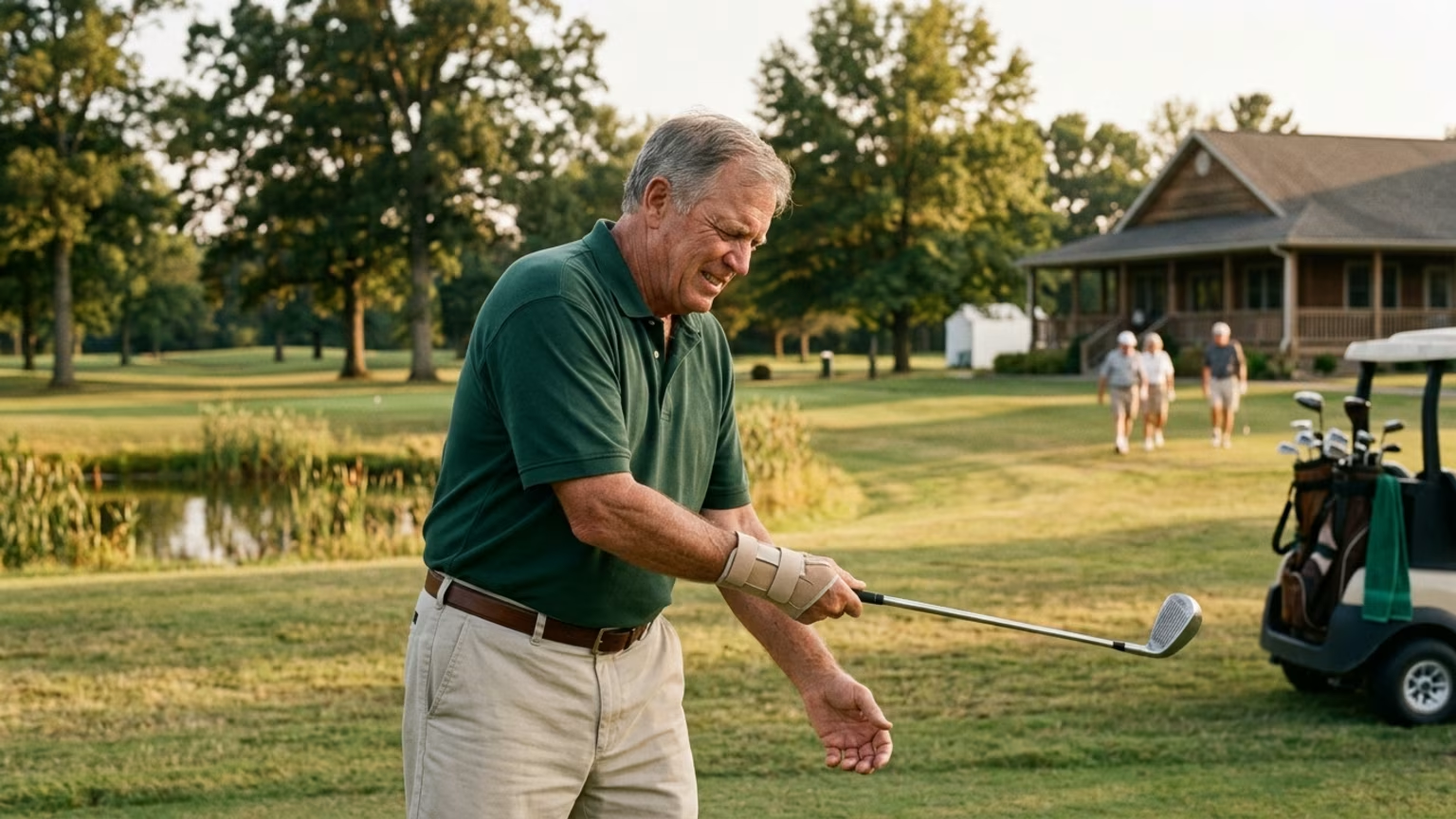
Ignoring early warning signs often leads to secondary problems. When pain increases with each swing, your body naturally begins changing your swing or gait to avoid the discomfort. This can produce compensatory arm or trunk movement. You might start walking differently or fail to finish a normal follow-through.
These unnatural compensations place new stress on different parts of your body. A Japanese hospital physician quoted by the Japan Health Golf Promotion Organization says pain is not necessarily a signal to abandon golf permanently. Instead, it can provide information about how load is being distributed through the body.
If your hip rotation is restricted, your lower back or knees might absorb the extra force. What starts as a minor irritation can easily escalate if you keep testing the painful movement.
Instead of guessing what is wrong, you need a practical decision framework to protect your body. This protocol is a practical decision aid rather than a diagnostic tool. It will help you determine the safest course of action while you are still on the course.
You can consider reducing your intensity when discomfort is mild, localized and stable. Your walking pattern must remain normal. The symptoms must not increase from shot to shot. Modify your approach by reducing swing length and speed rather than trying to hit through the symptom.
Use shorter clubs or irons if they allow a comfortable, controlled motion. Do not assume that a different club treats the underlying problem. Skip unnecessary range balls or additional practice swings.
If the symptoms do not settle, consider stopping after your current hole. Remember that simple strength workouts away from the course help build a strong foundation. They do not make you invincible during a round.
You must reduce your intensity or stop playing if pain increases with every swing. End the round if the pain alters your mechanics or prevents a normal walking pattern. The safest practical choice is to stop hitting full shots, walk only as needed and arrange transport if walking is uncomfortable.
Symptoms that recur whenever the golfer plays, interfere with normal golf, or fail to improve with rest warrant professional assessment. If you are struggling with recurring issues, learning how to pursue more swing speed without paying for it in pain requires guidance from a professional. You should never proceed by repeatedly probing the painful movement.
Stop playing right away if you experience sharp or shooting pain, pain radiating into your leg, numbness or weakness. Sudden pain after a forceful swing or a distinct pop always warrants medical evaluation. Orthopedic specialist guidance recommends paying attention to swelling and sharp pain during twisting. You must also watch for catching, joint instability and restricted hip rotation.
Night pain, pain at rest and persistent symptoms also require medical care. Do not manage these warning signs as ordinary soreness. A golf-back-pain guide recommends stopping immediately and obtaining medical advice for sharp or shooting pain. You should stop for pain radiating into the legs or symptoms that worsen during rest.
Pain that continues for more than two weeks also requires a doctor. Using joint capacity checks before you play can help, but they cannot replace medical care.
Golf-health guidance recommends recording the location, trigger, timing and next-day persistence of symptoms so a clinician can evaluate the pattern. Write down the exact location of the symptom. Note the first shot or hole where it appeared. Record the club you used and whether you made a full swing.
Document whether the pain happened during your backswing, downswing, impact, follow-through or walking. Understanding when to play through and when to step away becomes much easier for your doctor when you provide a clear timeline.
Next time your playing partner tells you to just adjust your stance to fix a tight back, trust your body's true mechanics instead.
Follow Golfergy for practical insights on performance, mobility, recovery and healthy ageing. Stay connected for new articles, research-led guidance and ideas to help you play better for longer.


Track where golf discomfort occurs, when it starts and what you were doing. Use clear notes to discuss back and joint symptoms with a clinician.


Learn which golf symptoms deserve attention, when to pause painful swings, and how a simple activity log can help you discuss recurring problems.

Review elbow and wrist pain patterns in golf through symptom notes, practice changes, ground contact and grip condition, without assuming a quick fix.
Explore practical resources on performance, recovery, mobility and golf longevity.
Read the Blog