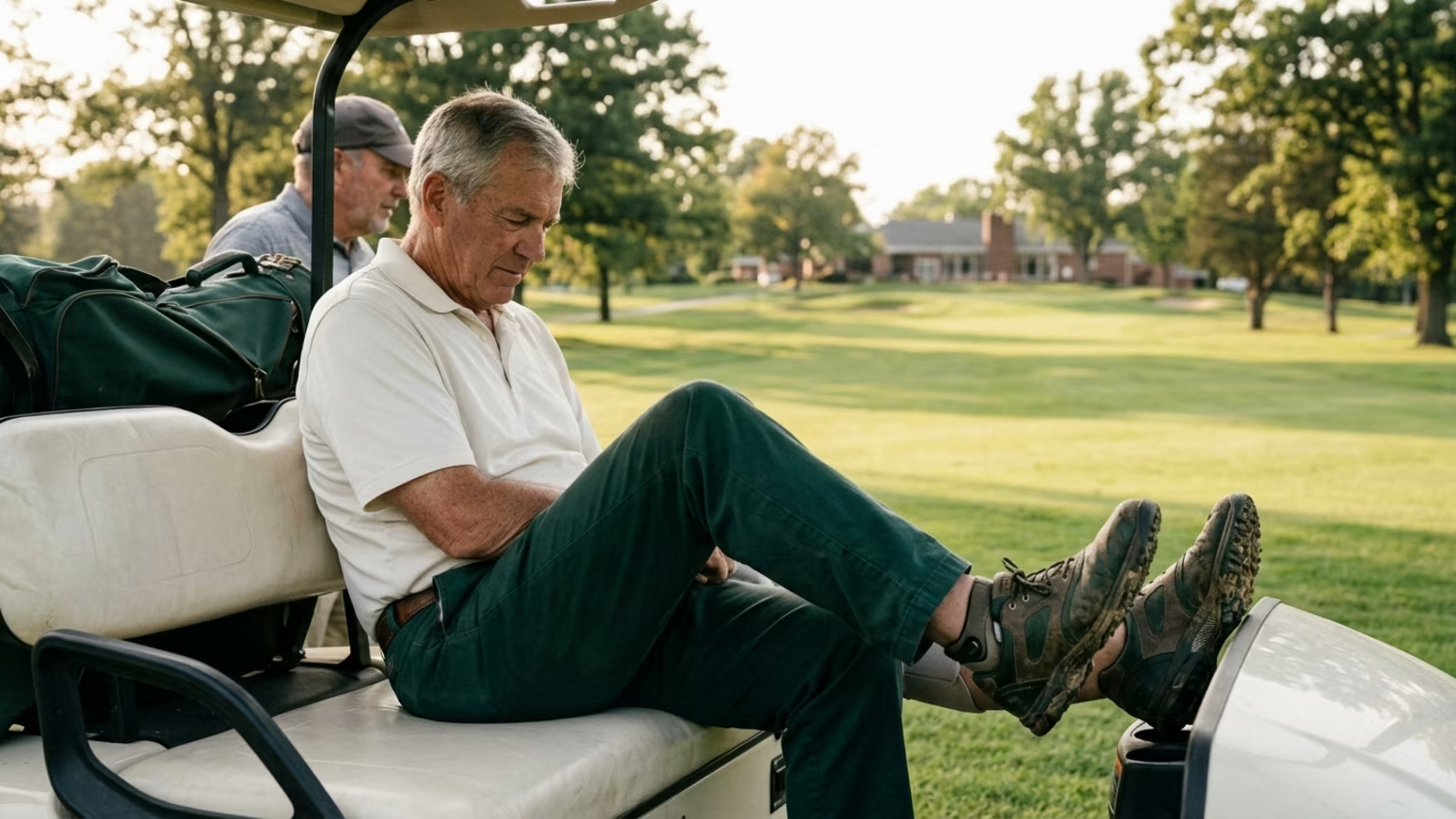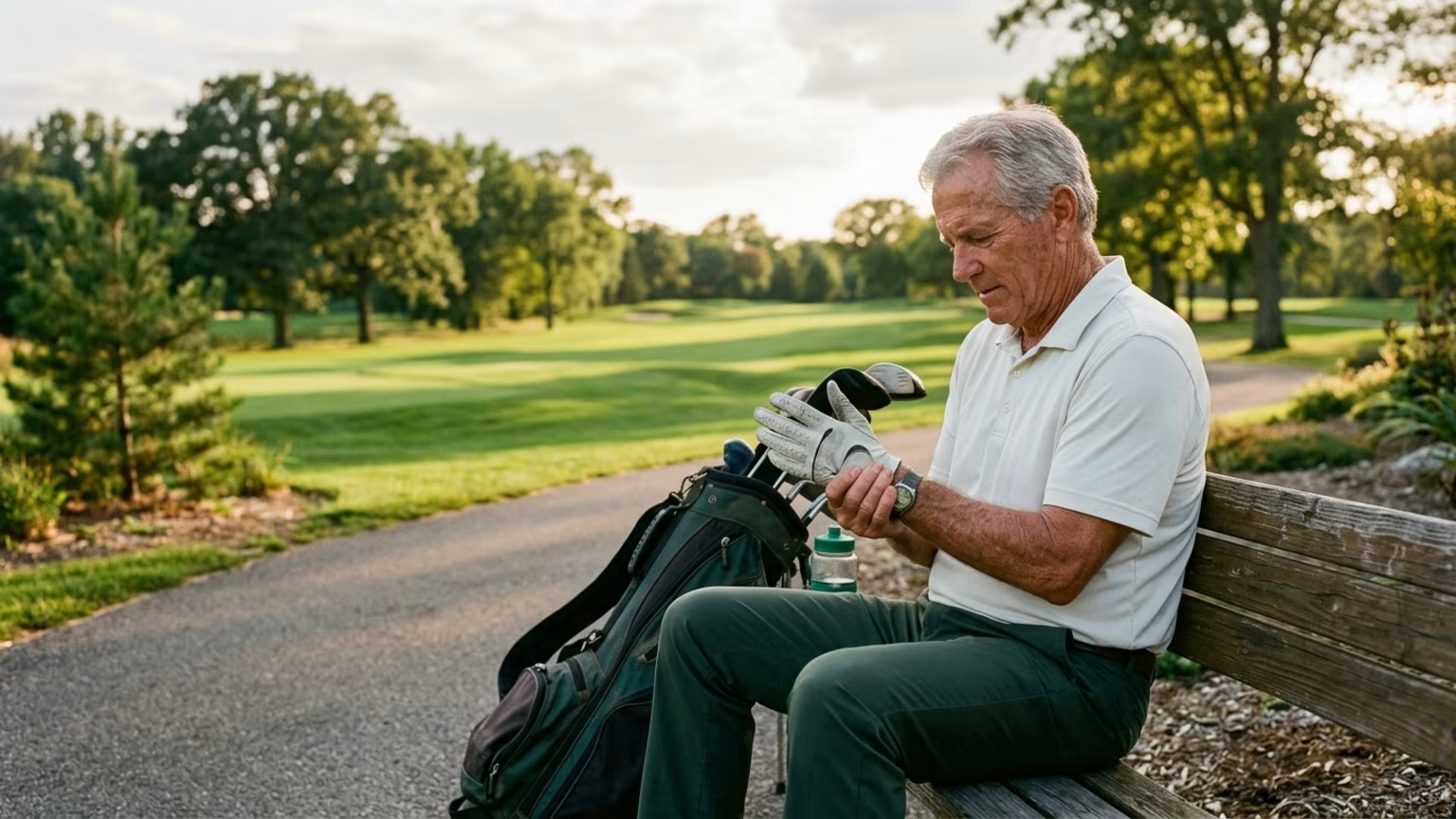

Learn why proper workload management is critical for older golfers. Discover how Adam Scott balanced rest and performance to prevent injuries at the BMW PGA Championship.




On September 18, 2026, Patrick Reed withdrew from the BMW PGA Championship during the second round with a hand injury. He was struggling at nine over par at the Wentworth West Course before stepping away. This flagship DP World Tour event took place just after players completed a major month connected with the FedEx Cup in the United States. Fatigue and injury were clearly affecting the professional field.
Jon Rahm finished last at 11 over par after rounds of 78 and 77. Reports described this performance as the worst 36-hole total of his career. These surprising outcomes highlight the intense physical toll of professional golf.
A hand injury in golf is often the outcome of repetitive force rather than a single event. The golf club operates as a long lever moving at high speeds. Your hands serve as the only physical connection to that lever. When the clubhead strikes the turf, the resulting vibration travels straight up the steel or graphite shaft.
The golf club shaft is extremely stiff by design. It transfers the energy from your body into the ball at impact. This design also works in reverse when you strike the ground. The shockwave travels upward from the clubhead directly into your fingers and palms.
Your lead hand usually absorbs the worst of this physical impact. The bones in your wrist are tightly packed together and rely on thin ligaments for stability. When the clubhead stops abruptly in the dirt, those small ligaments stretch beyond their normal limits. Repeated stretching causes inflammation and pain that can linger for months.
The force of hitting a golf ball creates a severe vibration that demands grip stability. Your grip pressure naturally increases to maintain control, which puts maximum tension on the flexor tendons in your forearms and hands. Over hundreds of practice swings and full rounds, this repetitive shock can inflame tendons or strain small ligaments.
If you hit the ball out of thick grass, the immediate resistance creates severe stress on the lead hand. A steep swing path also increases the amount of ground impact. When the club digs deep into the turf, the hands take the blunt force of that collision. Without proper rest, these micro-traumas accumulate until the tissue eventually fails.
Recreational players over 40 face a massive risk of joint and hand injuries because we rarely account for accumulated stress. We often assume that swinging with slower clubhead speeds protects us from the injuries that tour professionals face. However, aging tissues recover much slower from the repetitive impact of hitting the ground. When we try to play multiple days in a row on a golf trip, our swing mechanics naturally break down because of fatigue.
Younger players have highly elastic tissues that snap back quickly after a heavy impact. A golfer in their twenties might hit fifty balls out of deep rough without feeling any stiffness the next morning. Golfers over 40 lose that natural elasticity over time. Our tendons become slightly more rigid and our recovery window widens considerably.
We cannot train or play with the same reckless volume we used in our younger years. This reality is hard to accept for many experienced players. We remember our past capabilities and try to force our bodies to match those memories. The outcome is often a repetitive strain injury that ruins the entire golf season.
We get steeper in our downswing, take deeper divots, and force our hands to absorb even more punishment. The saddest thing our team has seen in golf is watching lifelong playing partners slowly drop out of our weekend group. It usually starts with a nagging shoulder or hand issue they ignore until it requires surgery. That pattern is exactly why I became obsessed with golf longevity.
We do not have to stop playing as we age, provided we do the right maintenance work between rounds. In the past, we have focused on how players ignore early pain signals to finish their round. The real issue here is about unmanaged workload volume. We force our bodies through too many consecutive rounds without scheduling adequate time for tissue repair.
Many amateurs will visit the driving range on Thursday, play 18 holes on Friday, and tee it up again on Saturday morning. This packed schedule leaves no room for the microscopic muscle tears to heal properly. Taking extended breaks between your rounds is a mandatory step for long-term health.
We can prevent these physical breakdowns by changing how we manage our playing schedules. Consider how 46-year-old Adam Scott prepared for the same BMW PGA Championship. Scott revealed that he had taken a couple of easier weeks leading up to the tournament. He told reporters he felt a little bit underdone from a golf perspective but arrived mentally fresh.
This cautious approach paid off immediately at Wentworth. Scott opened with consecutive rounds of 67 to reach 10 under par. This strong performance left him tied for second at the halfway stage. He sat two shots behind American Ryan Gerard, who led at 12 under after a bogey-free 65.
Scott shared second place with Italy’s Filippo Celli. His performance briefly moved him to the top of the clubhouse leaderboard. This standing changed when Gerard finished his round with an eagle and a birdie. Scott was navigating a field packed with elite talent, including Masters champion Rory McIlroy, British Open winner Ryan Fox, and 2025 U.S. Open champion JJ Spaun.
Scott was seeking his first four-round tournament victory in six years. He described the BMW PGA Championship as one of his top three events outside the major championships, alongside The Players Championship and the Australian Open. The tournament held great importance, but he chose to prioritize his rest over extra practice. He knew he was scheduled to represent the International team in the Presidents Cup the following week. He and Ryan Fox were expected to travel directly from the BMW PGA Championship to Illinois.
Older amateur golfers must prioritize arriving fresh over cramming in extra range sessions. If you have a busy sequence of rounds planned, try taking an easier week beforehand. You might feel slightly unprepared technically, but a rested body performs much better than an exhausted one. Scott showed that you can find your rhythm during the actual round.
He needed a few holes to adjust on the greens before recording eight birdies across a 10-hole stretch. Three bogeys partially offset that run, but his patience allowed him to score well. Scott also managed his mental energy perfectly by refusing to heap pressure on himself. He believed enjoying the weekend would help him get the best from his game.
Give yourself permission to use the opening holes to build confidence. A smart, low-stress opening helps protect your body from forced, aggressive swings. Understanding fatigue management and recovery is vital when playing consecutive days. Changing your physical preparation is another mandatory adjustment for extending your playing years.
A professional golfer has access to daily massage therapy and medical supervision. We must act as our own medical advocates by monitoring our fatigue levels honestly. If you feel tired before you even reach the course, your body is begging for rest. Listen to that physical signal instead of pushing through the fatigue.
I used to stand on the first tee doing long, static hamstring stretches because I thought it was the right way to warm up. I would actually feel weaker on my first drive, which caused me to grip the club too tightly and strain my hands. Research later showed me that dynamic movements, like leg swings and torso twists, prime the nervous system much better. Changing my five minute warmup completely transformed my opening tee shots.
We must allow the big muscles to power the swing instead of relying on our hands. Focus entirely on turning your trail hip to generate power on the downswing. You can learn more about proper physical preparation by reviewing our guide on The 10-Minute Movement Primer: Rethinking the First-Tee Warm-up. Prioritizing rest is just as critical, so look into our golf recovery resources for more strategies.
What adjustments will you make to your mobility routine this season to steer clear of this hazard?
Follow Golfergy for practical insights on performance, mobility, recovery and healthy ageing. Stay connected for new articles, research-led guidance and ideas to help you play better for longer.


The 2027 PGA Show is expanding its Performance Zone. Learn why the golf industry's shift toward fitness and recovery matters for players over 40.

Brooks Koepka called his 2026 PGA Tour return pathetic after struggling with his putting. Learn how older players can track performance to maintain consistency.

Learn why dynamic stability and neuromotor fitness matter for older golfers. Find practical habits to adapt to uneven lies and protect your aging joints.
Explore practical resources on performance, recovery, mobility and golf longevity.
Read the Blog