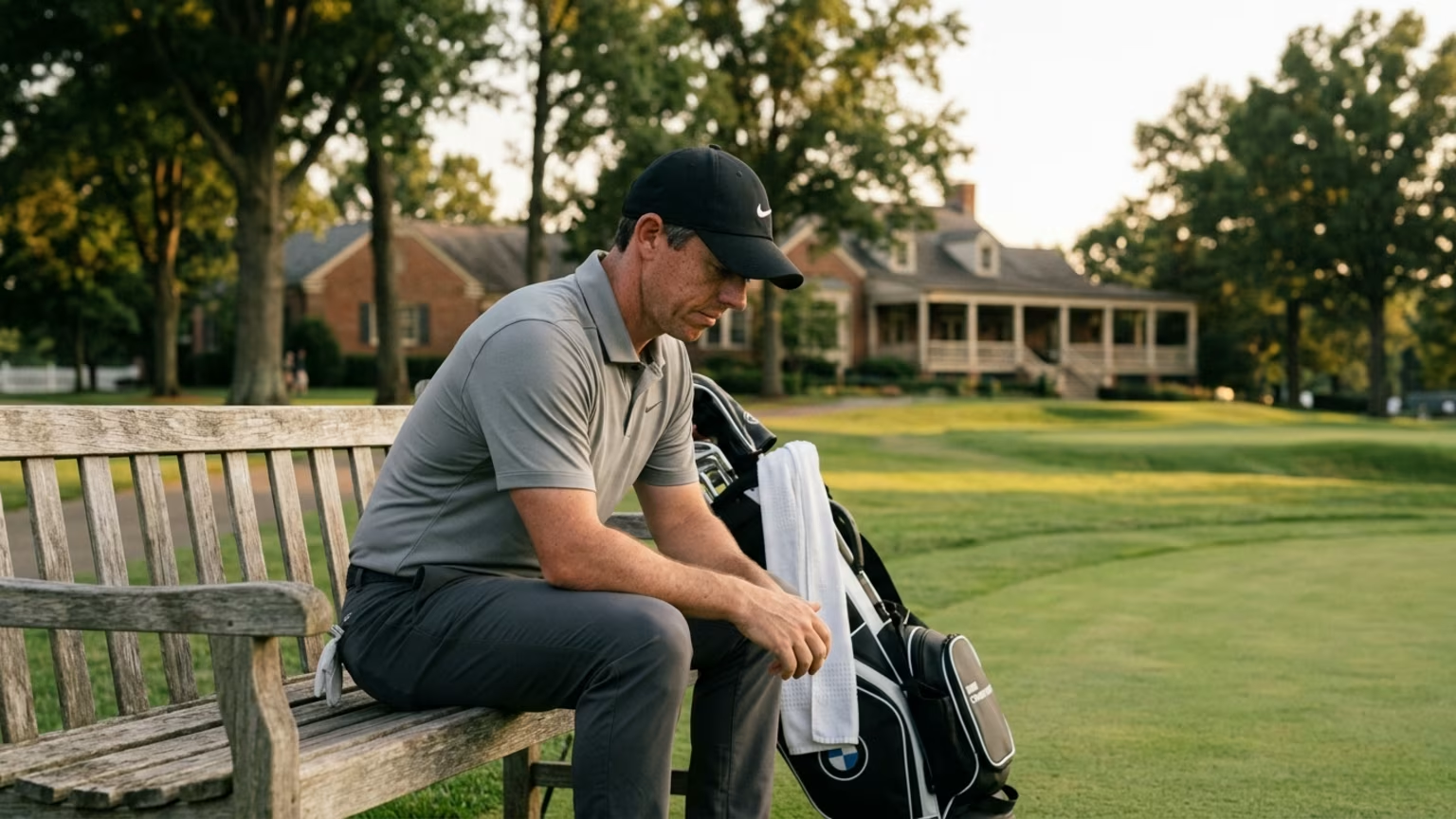

Learn how Rory McIlroy's late BMW Championship surge highlights the physical demands of consecutive rounds and why older golfers must plan their recovery.




A sudden drop in performance late in a demanding sequence of events reveals the heavy toll of consecutive tournament days. The contrast between finishing near the bottom of a field and fighting for a title just days later is a massive physical test. According to Sky Sports, Rory McIlroy followed a 66th place finish in a 68-player field at the FedEx St. Jude Championship with a late surge at the BMW Championship. He overturned a five-shot deficit during the final round but failed to birdie the last seven holes.
That late scoring drought allowed Wyndham Clark to win by three strokes. Clark claimed his third PGA Tour victory of the season with strong closing execution. McIlroy finished third and fell four strokes behind Clark overall. The dramatic shift highlights how a demanding schedule can test a player over the closing stretch.
Understanding this late-round drop can change how weekend players manage their own bodies. When consecutive rounds pile up, the body loses the ability to execute fine motor skills under pressure. Players often blame their swing technique when the real physical culprit is simple exhaustion. Recognizing the signs of fatigue is the first step toward building better stamina.
Tracking performance across multiple days provides a clear picture of how physical stress accumulates. A professional tournament round pushes the body through hundreds of violent rotational movements. McIlroy birdied three of his final four holes in the third round of the BMW Championship. On Sunday he recovered from early setbacks, including bogeys at the fourth and seventh holes, with a strong run.
He fired a three-birdie stretch over four holes starting from the eighth. This mid-round surge showed that his physical output was still temporarily high. However, decision quality can shift dramatically late in the day. Maintaining concentration becomes much harder when the body begins to tire.
McIlroy remained tied with Clark through the 15th hole before Clark made a 15-foot birdie at the 16th. At the par-five 17th hole, McIlroy went from bunker to bunker and made bogey. Meanwhile, Clark laid up and made birdie, setting up his final victory. This sequence perfectly illustrates how strategic errors often follow physical fatigue.
When a player feels their body slowing down, they often take unnecessary risks to force a good score. A smart lay-up is usually a better choice than attempting a hero shot from a bad lie. Poor course management on the final three holes ruins many otherwise excellent scorecards. Managing physical resources correctly prevents these late-round mental mistakes.
Professionals enter the season-ending Tour Championship at East Lake Golf Club with massive resources. McIlroy arrived at that event as the world No. 2 seeking a fourth FedExCup title. The field is strictly limited to the top 30 players in the FedExCup standings. They compete for a $10 million winner's prize with full physical therapy support.
These elite athletes travel with trainers, chefs, and recovery specialists. They receive daily massages and follow strict nutritional plans to keep their bodies fresh. Recreational players over 40 face a much different reality when stacking consecutive rounds. An amateur golfer usually heads straight from the 18th green to the car.
General health guidance recommends combining strength, weight-bearing, and balance work while allowing muscles time to recover. Older players cannot bounce back from walking 18 holes without managing their physical stress. Overuse injuries happen when players try to match the volume of a touring professional. Tendons and ligaments take much longer to heal as we get older.
Those who ignore this need for recovery often face bad decisions and poor mechanics late in the day. The lower back takes the brunt of the rotational force during a golf swing. When the legs get tired, the upper body tries to do all the work. This compensation pattern is the leading cause of back pain among older amateurs.
A few years ago, I noticed my swing falling apart around the 14th hole. My lower back would tighten up, and I started compensating with my arms. I spent months thinking it was a swing flaw. It was not until I started a simple evening hip mobility routine that I realized my glutes were just turning off from fatigue.
Fixing that one physical limitation brought my back nine scores down drastically. Strengthening the glutes provides a stable base for the entire golf swing. When working on your own mobility routine, focus entirely on turning your trail hip. This specific control helps you maintain proper posture over multiple heavy playing days.
Stacking demanding rounds requires alternating heavy swings with lighter putting and chipping practice. You cannot go to the driving range and hit a hundred full drivers on your off day. A light practice session keeps the muscles loose without adding unnecessary strain. Listening to your body is the most important skill you can develop.
Take five minutes before every round to perform some dynamic stretching. Arm circles, torso twists, and leg swings prepare the joints for the upcoming stress. A proper warm-up routine signals to the nervous system that it is time to perform. Small daily habits create massive changes in how your body feels by the 18th hole.
McIlroy said he was encouraged by the week but remained dissatisfied with parts of his game and swing. He did not attribute his final result to physical failure or extreme exhaustion. Even elite players struggle with their mechanics during a long playoff run. Recreational players should use their performance quality as a warning signal instead of assuming a bad hole is purely age-related.
A realistic goal is maintaining swing control and clear thinking through the final six holes. Do not try to copy the relentless practice volume of a young touring professional. Treat a full walking round as a high-load training day that requires proper rest. Knowing when to take a day off will extend your playing career significantly.
Build a schedule that inserts a true rest day between heavy weekend matches. Taking twenty-four hours away from the course allows inflammation to subside. You can stay active with a simple walking routine that does not involve swinging a club. Active rest promotes blood flow and helps flush metabolic waste from tired muscles.
This approach helps you manage mid-round stiffness and keeps your body ready for the next tee time. Pay attention to how your joints feel the morning after a long round. If you wake up with sharp pain, your body is telling you to back off. Pushing through severe pain will only keep you off the course longer.
Clark responded to the pressure with a birdie at the 16th and birdies at the final two holes. Winning a major title demands incredible late-round focus and flawless execution. For the rest of us, staying sharp late in the day relies on honest workload management. Managing your energy levels dictates how well you will perform on the back nine.
Numbers do not lie: preserving mobility is the ultimate equipment upgrade. The contrast between an early exit and a late surge always comes down to preparation. Golfergy advocates for treating rest days as a critical part of your weekly routine. A strong physical foundation allows you to hit confident shots when the round gets tough.
Tracking your fatigue levels will help you peak at the right time. Planning your rest carefully is just as crucial as perfecting your backswing. Your ability to recover determines your ability to compete. Protect your body today so you can keep swinging smoothly tomorrow.
Follow Golfergy for practical insights on performance, mobility, recovery and healthy ageing. Stay connected for new articles, research-led guidance and ideas to help you play better for longer.


Rest or move the day after 18 holes? Use fatigue, soreness, symptoms and your playing schedule to guide a flexible recovery day.


Compare foam rolling, massage, compression, heat and cold for golfers, with comfort benefits kept separate from performance and injury claims.

A measured guide to stiffness during and after golf, with gentle movement options, sustainable habits and NHS-backed back-pain warning signs.
Explore practical resources on performance, recovery, mobility and golf longevity.
Read the Blog