
Learn how acute golf injuries transition into chronic pain. We explain why mature players must prioritize proper recovery over masking symptoms to keep playing.




The transition from an acute injury to chronic pain is a biological process where temporary tissue damage sparks a lasting hypersensitivity in your nervous system. For the mature golfer, a sudden tweak in the lower back or a sharp ache in the elbow is an acute injury. If that tissue damage does not heal correctly, the nervous system can begin a hidden rewiring process. This biological shift turns a short-term problem into a persistent condition that makes swinging a golf club nearly impossible.
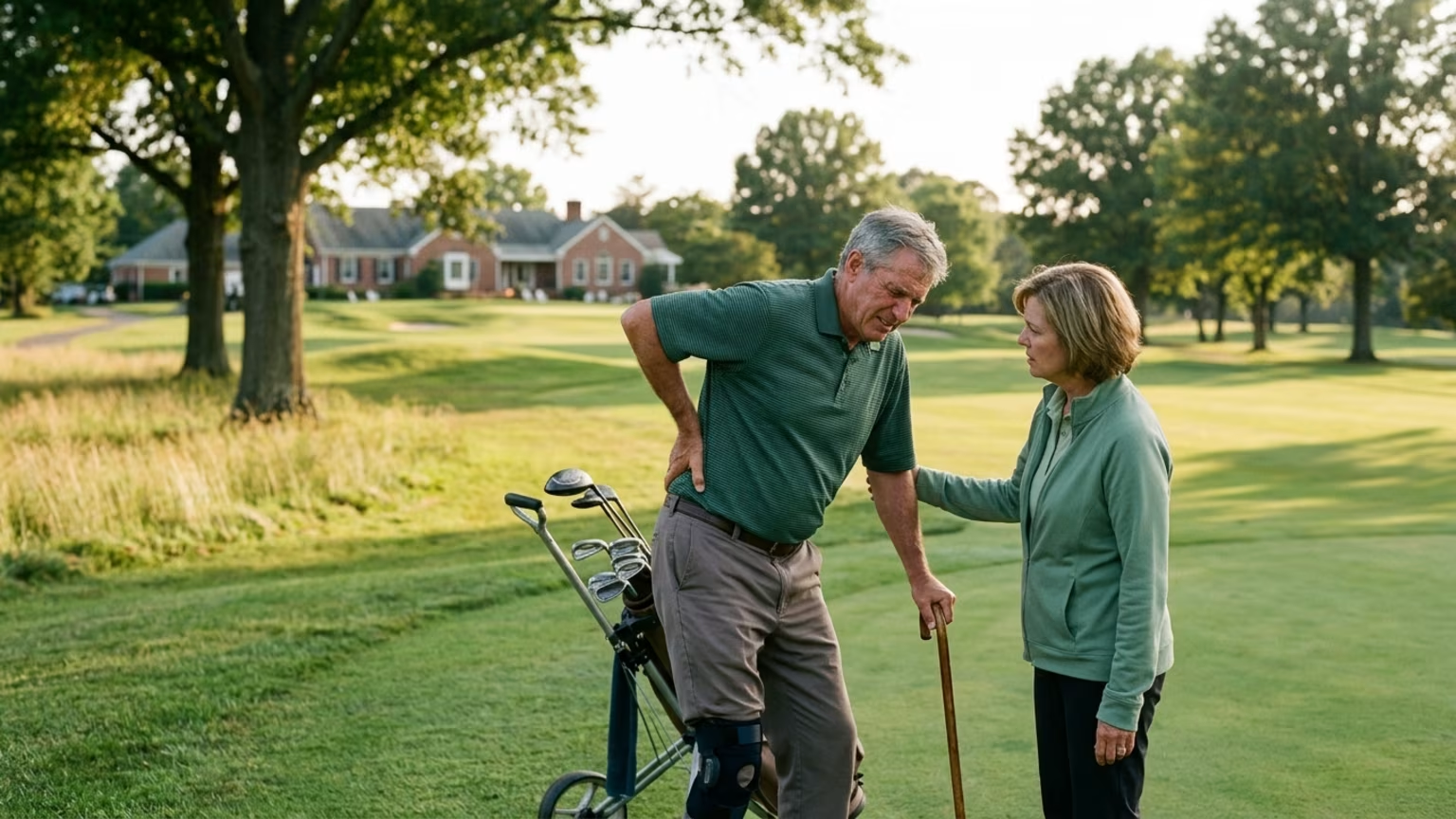
Recreational golf exposes players to repetitive loading, sudden twisting, and acute strains over 18 holes. You might feel a sharp pull while trying to extract a ball from thick rough. The immediate discomfort is your body signaling a localized tissue injury. According to findings published in Science Translational Medicine, a complex process occurs in the days following such an injury.
Researchers at the University of California, Irvine, used a hind-paw injection in a mouse model to mimic tissue injury. They tracked changes in the spinal cord during the days after injury. The researchers observed that support cells called oligodendrocytes temporarily reduced their production of myelin. This fatty insulation normally protects nerve fibers.
When this myelin machinery slowed down, nearby nerve fibers lost structural integrity. As a response, neurons increased the production of amyloid precursor proteins capable of generating beta-amyloid 42. Elevated beta-amyloid appeared in the spinal cord during the period when pain was shifting from an acute response into lasting hypersensitivity. This sequence created a window where short-term pain transitioned into a persistent condition.
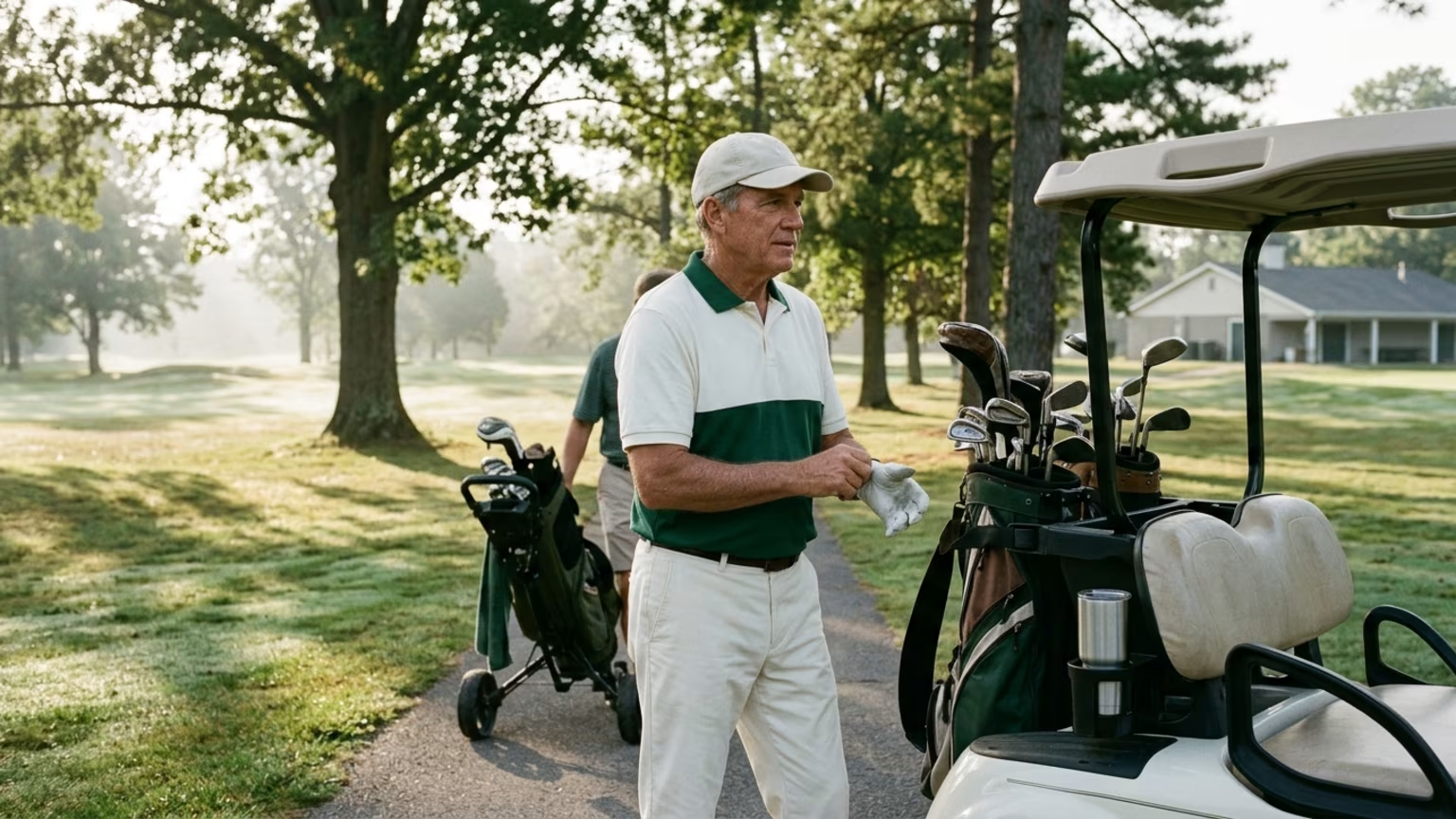
As golfers pass age 40 and 50, tissues require more time to recover from the repetitive stress of a regular weekend round. An acute strain from a poorly executed drive might take days longer to heal than it did a decade ago. During this longer recovery phase, older golfers often try to play through the discomfort. They might take over-the-counter medication just to finish the back nine.
The saddest thing I have seen in golf is watching lifelong playing partners slowly drop out of our weekend group. It usually starts with a nagging shoulder or knee issue they ignore until it requires surgery. That pattern is exactly why I became obsessed with golf longevity. We do not have to stop playing as we age, provided we do the right maintenance work between rounds.
Masking symptoms does not mean the underlying tissue injury is improving. If you continue to place repetitive loading on a compromised joint, you risk pushing an acute strain into a prolonged state of distress. Recognizing how golfers over 40 can tell normal soreness from serious injury helps you decide when to seek help. Ignoring these physical warning signs often leads to worse outcomes.
While the UC Irvine study was conducted on mice and did not specifically examine older golfers, the biological principle of injury management applies deeply. The transition from acute to persistent pain represents a critical risk window. Older players must respect this window by focusing on proper healing rather than a rushed return to the course. Allowing tissues to fully repair prevents small strains from becoming season-ending conditions.
The UC Irvine study, led by Daniele Piomelli, offers a fascinating look at why some injuries resolve while others linger. The team found that the early development of chronic pain in mice was linked to beta-amyloid biology. This is the same broad protein pathway widely associated with Alzheimer’s disease. The researchers tested several interventions to block this pathway shortly after injury, including an antibody and three chemically distinct drugs.
Blocking amyloid production during an early post-injury window prevented persistent pain in the mouse models without eliminating the initial acute pain response. Piomelli noted that the research provides a mechanistic explanation for why the transition to chronic pain happens when it does. He added that this identifies a potential opportunity to intervene while the process remains reversible. The report clarifies that mice later developed spinal deposits resembling Alzheimer’s-related plaques.
The study does not suggest that a physical injury causes Alzheimer’s disease in humans. The findings remain preclinical, meaning the experiments were conducted in mice and the human relevance remains to be established. The researchers had not been looking specifically for an amyloid connection initially. The central interpretation is that beta-amyloid played a causal role in the development of persistent hypersensitivity in those specific mouse models.
The available sources do not establish that early evaluation of a golf strain prevents chronic pain through the beta-amyloid pathway identified by UC Irvine. The research does not provide a human diagnostic test or suggest that current Alzheimer’s drugs are safe treatments for golf injuries. Therefore, preventing the initial injury and respecting the recovery process are your best defenses against persistent pain. Focus on foundational habits to protect your body.
The American Academy of Orthopaedic Surgeons recommends warming up before a round as part of basic injury prevention. A proper warm-up prepares your tissues for the sudden twisting and repetitive loading required by the golf swing. The academy also includes hydration among its injury-prevention guidance. Taking time for the 10-minute pre-round warm-up that prepares the whole golfing body can help prevent the acute strains that lead to long-term issues.
If you sustain a strain or sprain, treat it as an assessment problem rather than just a pain problem. Clinical sports-injury guidance advises seeking professional evaluation when symptoms worsen, fail to improve, or cause limping. Persistent swelling, bruising, instability, or a meaningful loss of motion are clear signs that you should stop self-managing the issue. Understanding why complete rest is a trap for injured golfers helps you balance active recovery with necessary medical guidance.
Wait to resume golf until your ordinary movement is improving, and increase your swing intensity gradually. A defensible practical approach is to gradually increase walking and practice volume under the guidance of a qualified clinician when symptoms persist. Avoid confusing symptom relief with genuine tissue recovery. Taking the time to heal properly prevents the repetitive stress that turns a temporary setback into lasting discomfort.
For an experienced golfer trying to extend playing years, the objective should be restored function rather than merely completing the next round. Pain reduction might make it easier to move initially. It does not by itself demonstrate that a tendon, muscle, joint, or nerve injury has recovered. Creating a clear recovery trajectory helps you return to the course with confidence.
Protecting your bodily systems from lasting injury requires proactive care, proving that patient recovery is the ultimate foundation for playing better for longer.
Follow Golfergy for practical insights on performance, mobility, recovery and healthy ageing. Stay connected for new articles, research-led guidance and ideas to help you play better for longer.


Club Champion’s AOSSM partnership raises a post-injury question: do your clubs still fit your swing? Equipment assessment remains separate from medical care.


Track where golf discomfort occurs, when it starts and what you were doing. Use clear notes to discuss back and joint symptoms with a clinician.

Learn which golf symptoms deserve attention, when to pause painful swings, and how a simple activity log can help you discuss recurring problems.
Explore practical resources on performance, recovery, mobility and golf longevity.
Read the Blog