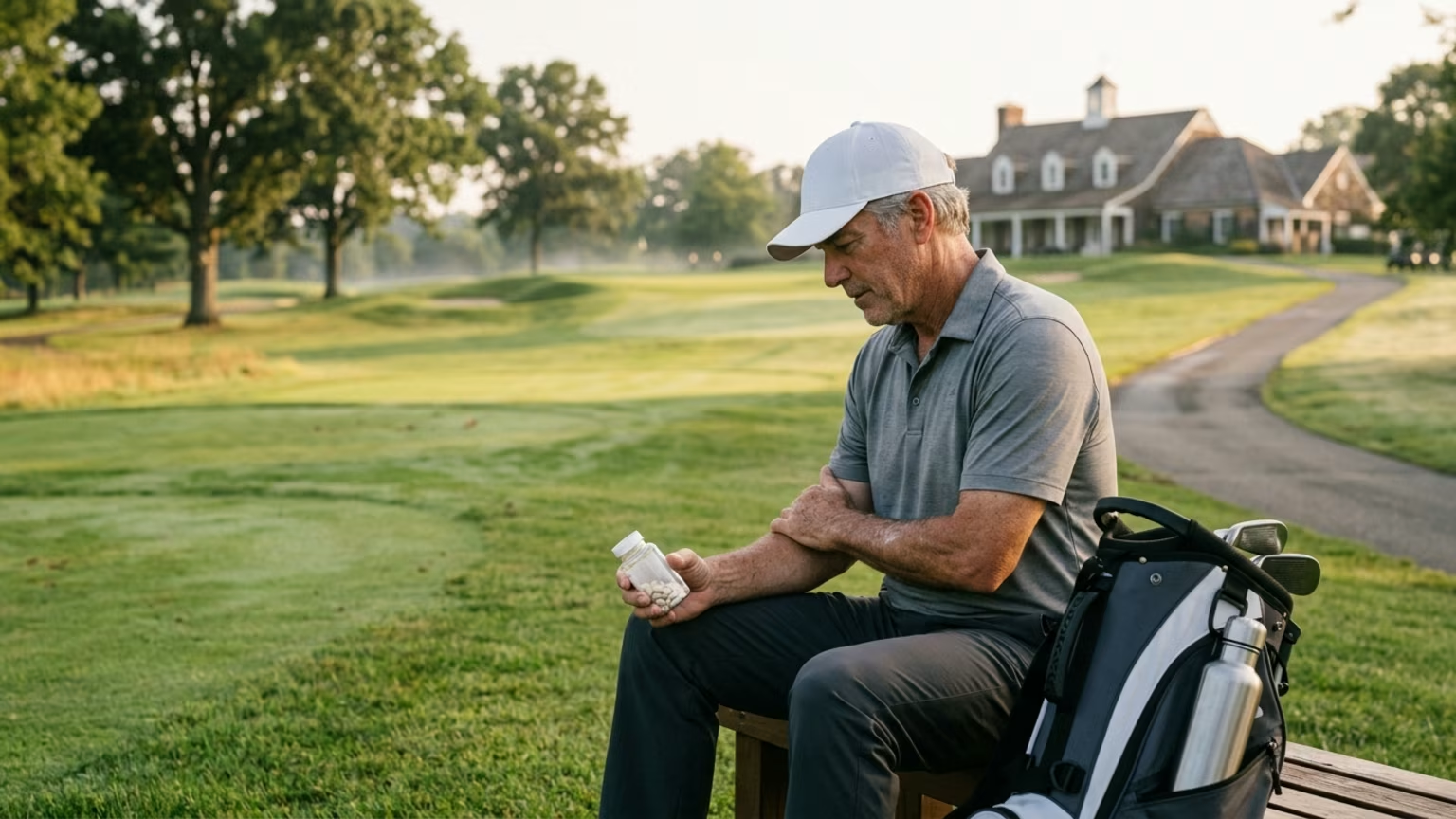

A new 2026 study explores how the probiotic L. plantarum GKK1 may attenuate exercise-induced muscle damage, offering a fresh perspective on golf recovery.




Exercise-induced muscle damage is simply the microscopic tearing your tissue sustains during intense physical effort, with a recent trial showing a targeted probiotic reduced key markers of this breakdown across 48 participants. A randomized, double-blind, placebo-controlled study investigated whether four weeks of Lactiplantibacillus plantarum GKK1 supplementation could reduce this fatigue. The researchers assessed healthy, sedentary adult men before a severe exercise protocol and monitored their recovery up to 48 hours afterward. This points toward a future where gut health plays a measurable role in how you bounce back from physical stress.
After the four-week supplementation period, participants completed a demanding protocol consisting of 100 maximal vertical jumps. Researchers assessed them at three, 24 and 48 hours afterward using countermovement jumps, isometric mid-thigh pulls and a 30-second Wingate anaerobic test. Compared with placebo, the GKK1 group showed lower post-exercise levels or smaller increases in creatine kinase, myoglobin, high-sensitivity C-reactive protein and TBARS. Creatine kinase and myoglobin are commonly used indirect indicators associated with muscle damage.
High-sensitivity C-reactive protein is associated with inflammation, while TBARS is associated with oxidative stress. The GKK1 group also experienced smaller post-exercise declines in several functional measures, including countermovement-jump rate of force development, relative peak force and jump height. Furthermore, the probiotic group reportedly had smaller decrements in Wingate anaerobic performance after the damaging exercise protocol. The report specifically states that GKK1 significantly mitigated the severe exercise-related depletion of serum dopamine seen in the placebo group.
When you walk 18 holes, your body endures thousands of repetitive steps and sudden rotational bursts. Each aggressive swing puts shear force on your lower back, while uneven lies challenge your stabilizing muscles. This repeated stress causes microscopic tissue damage that accumulates rapidly by the back nine. That physical toll is often the real reason your lower back aches after golf, especially when fatigue compromises your swing mechanics.
The GKK1 study tested vertical jumping, but the resulting biological response mirrors the fatigue you feel after a demanding tournament round. Blood analyses suggested a more favorable stress-response profile involving testosterone, human growth hormone, catecholamines and dopamine in the GKK1 group. GKK1 attenuated acute adrenaline spikes following the intense physical test. These chemical responses help dictate whether you feel energized or entirely wiped out after leaving the final green.
Muscle recovery slows naturally as you pass your fortieth birthday. Older adults differ from young adults in muscle repair, medication use, gut-microbiome composition and susceptibility to injury. A 2026 review reported that selected probiotic strains and fiber-rich diets may influence recovery through gut-microbiome pathways. This review noted short-term probiotic supplementation as a possible strategy for influencing muscle synthesis markers and recovery in elderly patients.
Older players must carefully balance this recovery with strategic power training after 45. However, older players cannot assume that any generic supplement will combat age-related decline. The GKK1 study involved healthy adult men whom the researchers described as young, not mature recreational golfers. A separate randomized controlled trial found that four weeks of a multistrain probiotic did not significantly affect aerobic or anaerobic performance in trained male endurance runners.
This contrast highlights that probiotic benefits are strain-specific and highly population-dependent. The GKK1 report also cites earlier research on other L. plantarum strains, including TWK10 and PS128. TWK10 research has reported effects on muscle mass, strength and endurance in animal and human models. Meanwhile, PS128 research has examined half-marathon recovery and physiological adaptation in triathletes.
The study authors remain cautious about their findings regarding GKK1 and functional muscle recovery. They stated the findings suggest that the probiotic may support recovery rather than definitively claiming it prevents injury. The authors proposed several possible mechanisms for these results, including anti-inflammatory, muscle-protective, metabolic and neuroendocrine effects. These mechanisms remain hypotheses because gut-microbiome analysis was absent from this specific trial.
Commercial involvement also requires careful consideration when evaluating new nutritional studies in sports science. The probiotic strain was GKK1, supplied by Taiwan-based Grape King Bio Ltd., whose researchers participated alongside scientists from several Taiwanese universities. Consumers should never assume that an unspecified formulation will reproduce the specific GKK1 findings. The study’s reported limitations included limited demographic representation, the short four-week intervention and the absence of direct microbiome measurement.
Recent research has also examined other supplements for exercise-induced muscle damage, illustrating a broader trend. A 2026 study of a sulforaphane-containing supplement reported lower post-exercise creatine kinase and myoglobin. The supplement group showed a CK of 121.52 ± 16.89, versus 291.84 ± 133.07 in placebo. Myoglobin levels were 15.82 ± 1.95 versus 27.31 ± 5.71, respectively, showing that supplements may change biochemical markers without necessarily improving measurable performance.
While emerging gut-health science is fascinating, your physical longevity must begin with established fundamentals. Protein and hydration remain central components of recovery nutrition for every active adult. A 2026 study found that protein supplementation combined with resistance training improved several outcomes, while adding a synbiotic did not provide additional benefits. Older players should prioritize adequate fueling, progressive conditioning and smart ways to ease back onto the course.
Commonly cited per-meal protein targets sit at approximately 0.25 to 0.40 grams per kilogram of body weight, often translating to about 20 to 40 grams for healthy adults. A recent review emphasized that rehydration requires an individualized approach based on fluid deficit and sodium loss. You should also account for body-mass changes and the timing of your next exercise session. Beyond basic nutrition, proper tissue loading is vital to protect your spine and stay pain-free on the golf course.
"When I developed medial epicondylitis, commonly known as golfer's elbow, I thought I needed complete rest. Six weeks off the course did nothing to help. I finally learned that active recovery with a flexbar was the actual solution. It taught me that treating golf injuries requires loading the tissue properly, not just sitting on the couch and hoping for the best."
That exercise-induced microscopic tissue tearing we discussed earlier is a natural part of physical exertion, not a disease you must eradicate with supplements alone.
Building a robust physical baseline through active recovery, strength training and sufficient protein remains the true path to playing better for longer.
Follow Golfergy for practical insights on performance, mobility, recovery and healthy ageing. Stay connected for new articles, research-led guidance and ideas to help you play better for longer.


Rest or move the day after 18 holes? Use fatigue, soreness, symptoms and your playing schedule to guide a flexible recovery day.


Compare foam rolling, massage, compression, heat and cold for golfers, with comfort benefits kept separate from performance and injury claims.

A measured guide to stiffness during and after golf, with gentle movement options, sustainable habits and NHS-backed back-pain warning signs.
Explore practical resources on performance, recovery, mobility and golf longevity.
Read the Blog