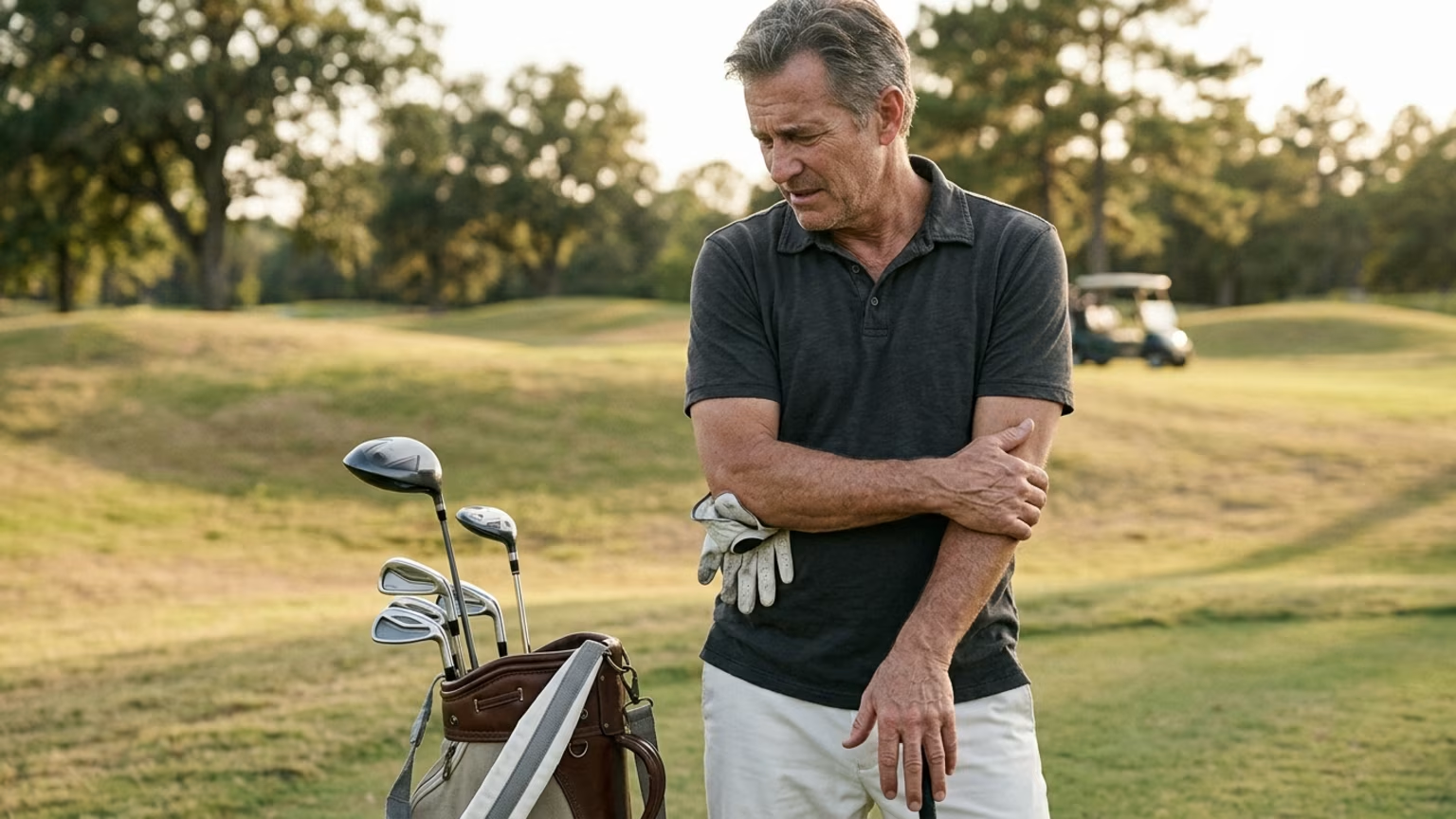

Stop ignoring golf elbow pain. Learn the true causes of medial epicondylitis, how to manage your grip load, and why complete rest is the wrong approach.




According to NHS Inform, many new elbow problems begin to settle within six weeks of simple self-care. That timeline only works if you actually listen to the warning signs. Most golfers ignore the early signals and keep hitting balls from hard mats until the pain becomes unbearable. Pushing through a dull ache in your forearm to build resilience is a guaranteed way to ruin your season.
The common belief is that elbow pain requires either complete rest or toughing it out. Both extremes are completely wrong. Taking a month off without rehabilitating the tissue leaves your arm totally unprepared for your next swing.
Complete rest is the most repeated piece of bad advice for tendon pain. An older recreational golfer loses muscle capacity quickly when they stop moving. When I developed medial epicondylitis, commonly known as golfer's elbow, I thought I needed complete rest. Six weeks off the course did nothing to help.
I finally learned that active recovery with a flexbar was the actual solution. It taught me that treating golf injuries requires loading the tissue properly, not just sitting on the couch and hoping for the best.
Mainstream advice also gets stuck on the names of these conditions. Golfers often assume they cannot get tennis elbow from playing golf. The Mayo Clinic states that tennis elbow affects the outer elbow and typically worsens with gripping, lifting, or twisting objects. Golfer's elbow involves the inner elbow and repetitive strain of the forearm muscles.
Both conditions come from the same basic problem of excessive repetition. Your arm does not know which sport you are playing.
The true root cause of your elbow pain is a mismatch between your physical capacity and your workload. Your tendons are protesting a combination of force, repetition, and insufficient recovery. A sudden increase in practice volume is a major risk factor for tendon problems. This is especially true if you are returning to heavy practice after a long period of inactivity.
Many players blame their swing mechanics for a sore arm. The reality is that excessive grip pressure and repeated gripping are often the real culprits. Repeatedly clenching the club overloads the forearm tendons over time. These are the exact same tendons that control your wrist and finger movements.
Hitting off hard mats only compounds the stress traveling up your club shaft. You must also pay attention to the exact location of your symptoms. Numbness or tingling in the ring and little fingers is a serious red flag. This should not be dismissed as ordinary golfer's elbow because the ulnar nerve runs near the medial elbow.
Seeking professional help is critical when these neurological symptoms appear. Severe swelling, noticeable weakness, redness or pain that wakes you at night requires prompt medical assessment. Trauma, fever, heat, or rapidly worsening symptoms can indicate infection or significant inflammation. Do not try to treat trauma or severe symptoms with a bag of ice and wishful thinking.
Golfers love to buy their way out of physical problems. A player with elbow pain will often rush to change their grips or buy new graphite shafts. Changing your equipment might alter the force you feel during impact. Unsuitable equipment is worth investigating if it changes your grip tension.
However, new grips will not cure an overloaded tendon. Research from the sports world cautions against viewing equipment as a universal fix. A study reported by ScienceDaily found that grip size alone was not a determining factor for tennis elbow. Changing your clubs without modifying your practice volume is a wasted effort.
The new equipment will simply help you overload the same tired muscles.
Golfergy's rational approach for a golfer over 40 is active load management. Clinical prevention guidance focuses on modifying your activity rather than avoiding it entirely. You need to match your practice sessions to your current strength level. If pain appears during gripping or lifting, temporarily reduce the activity that provokes those symptoms.
You can start by auditing your recent workload today. Count your practice swings, range balls, and days without recovery. Introduce any equipment changes gradually to see how they affect your grip tension. When making a swing adjustment to protect your arm, focus entirely on reducing your trail hand pressure.
Keep your mind on that single variable instead of overhauling your entire setup. Inadequate forearm conditioning makes you vulnerable to repetitive strain. Building forearm capacity outside the course is the best way to handle the repetitive gripping of golf.
Health New Zealand advises seeing a healthcare provider when symptoms do not improve. A professional can help you build a progressive strengthening routine. This progressive loading prepares your tissues for the actual demands of the game.
Six weeks of smart, progressive recovery is much better than six months of nagging pain. Ignoring the early warning signs only guarantees a longer healing process. By treating your grip pain as a useful signal, you can adjust your workload and keep playing. Focus on progressive strength instead of absolute rest.
For more guidance on protecting your body, review our advice on What Golf Strength Really Means After 40. You should also audit your mobility so your hips take the strain off your arms. Reading our guide on The Rotational Audit: Reclaiming Hip and Spine Mobility for a Pain-Free Swing is a great next step. Take small actions today to protect your swing for tomorrow.
Follow Golfergy for practical insights on performance, mobility, recovery and healthy ageing. Stay connected for new articles, research-led guidance and ideas to help you play better for longer.


Review elbow and wrist pain patterns in golf through symptom notes, practice changes, ground contact and grip condition, without assuming a quick fix.


Tiger Woods’ 2017 Dubai withdrawal offers a measured lesson for golfers over 40, with NHS guidance on when back pain needs medical attention.

Understand a stiffer golf turn, notice changes without self-diagnosis and learn when comfortable movement or individualized advice may help.
Explore practical resources on performance, recovery, mobility and golf longevity.
Read the Blog


