

A practical recovery checklist for golfers over 40 playing on consecutive days. Learn how to manage physical exertion, stay hydrated, and adjust your swing.




"Why do my legs and back feel like concrete by the 12th hole of our annual golf trip?" It is the most common question we hear from golfers over 40. Playing 18 holes multiple days in a row is remarkably tough on an older body. You spend four or five hours on your feet, execute dozens of violent rotational movements, and gradually accumulate fatigue. Kriz Physical Therapy notes that a typical round combines walking with bending and squatting.
It also involves frequent rotating, swinging, balancing and handling equipment. The specific physical demands of the game will always vary based on how you play and the layout of the course. A flat layout places a different load on your legs than a hilly track with severe elevation changes. This is why having a consistent recovery routine between rounds matters so much for experienced players. At Golfergy, we focus heavily on these simple habits because they directly extend your playing years.
The short answer is accumulated physical stress combined with inadequate recovery between your rounds. Golf is a moderate-intensity aerobic activity that places shifting demands on your muscles, tendons, and joints over several hours. When you play on consecutive days without properly resting, the baseline fatigue from your previous rounds carries over to the next morning. Your body never fully clears the physical stress before you head back out to the first tee.
MyGolfMedia notes that a single-round comparison showed walking was associated with higher core temperature and perceived exertion compared to riding in a cart. While that specific finding does not answer exactly how walking affects golfers over several consecutive days, the cumulative effort clearly adds up quickly. This steady physical demand causes large muscle groups to stiffen as a protective mechanism against overexertion. By the time you reach the back nine on the second day, your body is actively fighting to stabilize itself.
When your body stiffens up on the second or third day of a trip, your swing path naturally changes. A restricted torso makes it difficult to complete a full shoulder turn on the backswing. To compensate for this limited rotation, many older golfers start lifting the club with their arms rather than turning their chest. This arm-dominant move steepens the downswing path and frequently leads to weak contact or fat shots.
A sudden loss of mobility directly reduces your clubhead speed and your overall driving distance. You might notice that your ball flight becomes noticeably lower and shorter as the round progresses. MyGolfMedia reports that walking a round was associated with a greater post-round performance decline compared to riding. However, they caution that this performance difference involved just one measurement on a single hole and does not establish a performance decline across an entire round.
Still, any stiffness that alters your swing path will make it harder to find the center of the clubface. You end up working twice as hard just to advance the ball down the fairway. This creates a cycle of worsening fatigue and poorer mechanics.
The safest adjustment you can make during the round is to manage your internal temperature and monitor your exertion levels. Kriz Physical Therapy summarizes the International Consensus Statement on Golf and Health as recommending steady hydration, particularly in hot or humid conditions. They advise golfers to keep fluids available and drink regularly according to their own personal needs and conditions. There is no single fixed-volume hydration prescription that works perfectly for every player on the course.
If you feel tightness setting in during the back nine, shorten your swing slightly and focus entirely on turning your trail hip. Do not try to force a deep stretch on the tee box while your muscles are actively fatigued and vulnerable. Instead, take an extra club for your approach shots and swing at a comfortable three-quarter pace. This minor setup adjustment protects your lower back while keeping the golf ball in play.
Building a post-round recovery checklist is the most effective way to handle back-to-back days of golf. You should ease out of the round by taking a few minutes to cool down before jumping straight into a long drive home. Pay close attention to how your body feels and notice if your fatigue or discomfort feels different from a normal day. You can refine your personal routine by learning simple ways to monitor your physical readiness between your tee times.
Adjust your plans for the next round based on this individual feedback rather than blindly pushing through the pain. Your routine should also include eating a normal, balanced meal to refuel your body for the next day. The available golf research does not support a strict recovery formula or a specific nutrient ratio for players. Simply eating adequately and rehydrating based on the day's heat and humidity will help prepare your body for tomorrow.
The goal is to build simple, sustainable habits that address the physical toll of walking the course. Kriz Physical Therapy points out that the health benefits of golf are likely greater for those who walk rather than ride when they are able. However, if walking leaves you completely exhausted on a multi-day trip, choosing to ride the next day might be the smarter play. Learning to adapt your routine to your current physical state is the absolute key to longevity in this game.
During your next practice session at the driving range, take a few moments to explicitly assess how your body responds to repeated swings. Hit ten balls with your normal driver swing and pay close attention to your lower back and hip mobility. Notice if your muscles begin to feel tight after just a short burst of moderate activity.
If you detect early signs of stiffness, experiment with a shorter backswing to see if your contact improves without pain. Take a brief break, drink some water, and evaluate how your legs feel after standing on the mats. Use this direct physical feedback to adjust your pacing and hydration strategy before your next multi-day golf trip. Assessing your baseline readiness now will make consecutive rounds much more enjoyable later.
Follow Golfergy for practical insights on performance, mobility, recovery and healthy ageing. Stay connected for new articles, research-led guidance and ideas to help you play better for longer.



Learn how to evaluate your total physical workload and decide if you are ready for another round of golf using a simple check of your soreness and mobility.

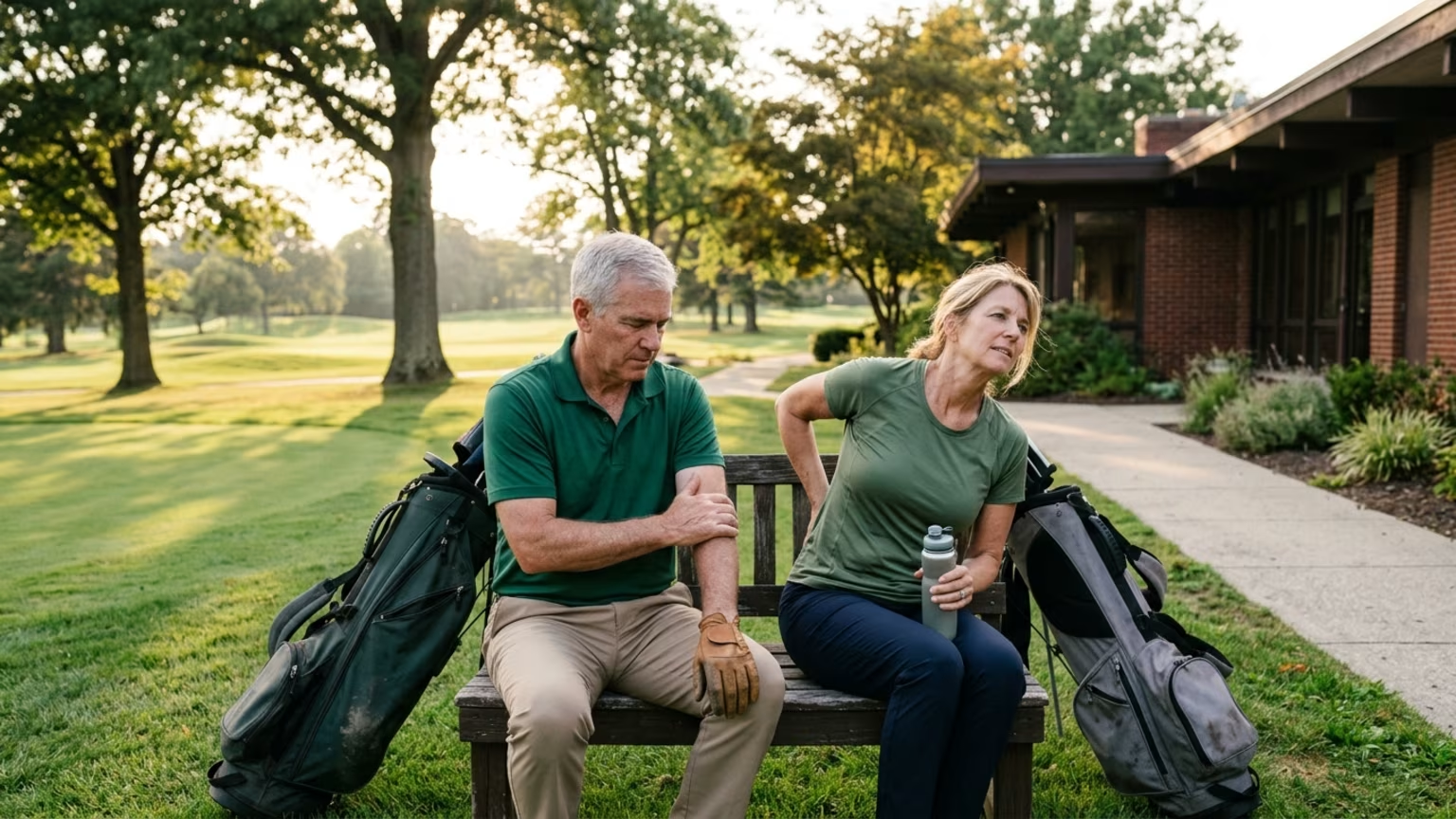
Learn why your legs and back tighten up late in a round. Understand how cumulative fatigue changes your golf swing and find simple strategies for recovery.
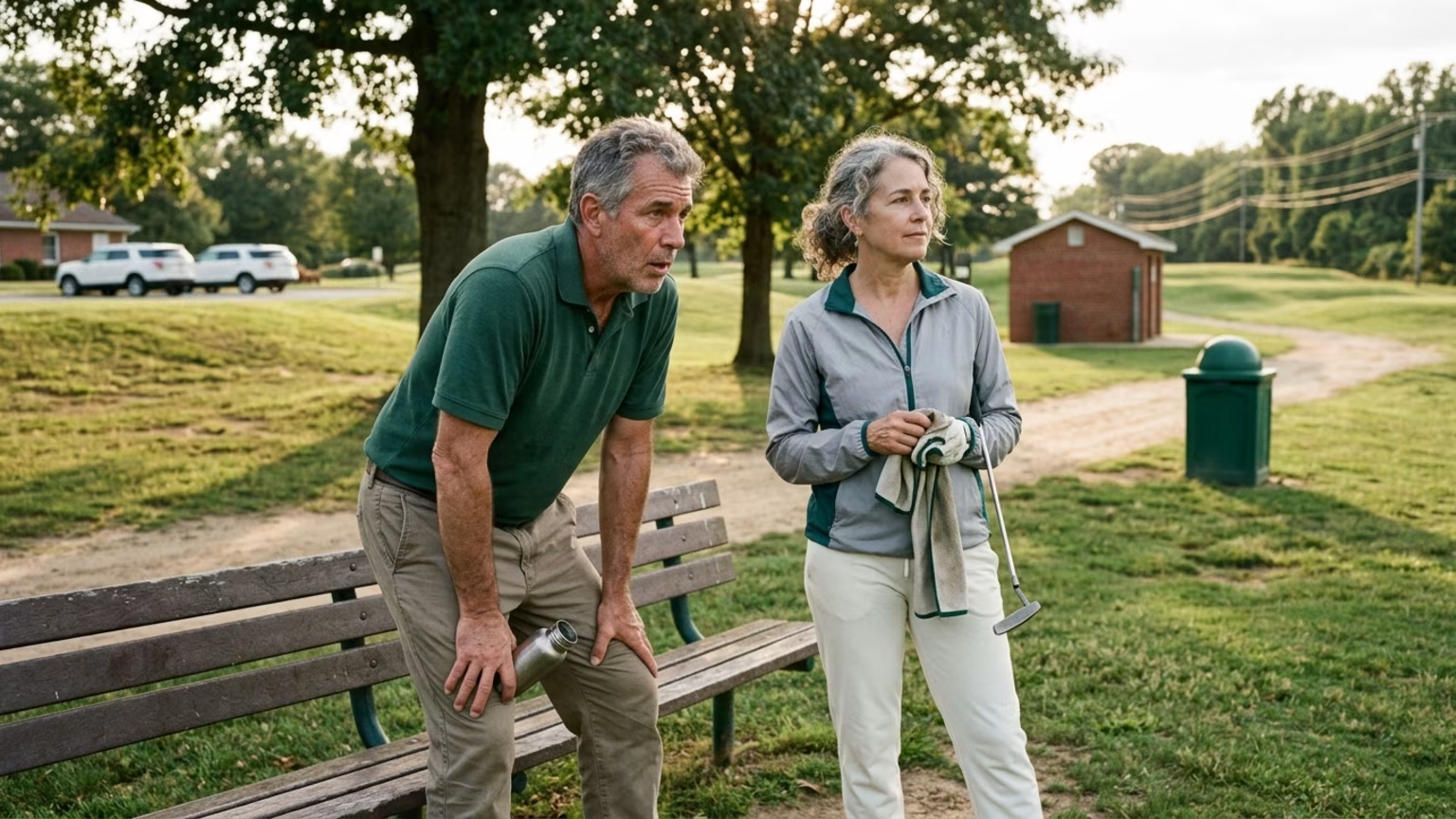
Read daily physical cues to gauge recovery between golf rounds. Learn practical ways to manage on-course fatigue and safely adjust your playing schedule.
Explore practical resources on performance, recovery, mobility and golf longevity.
Read the Blog