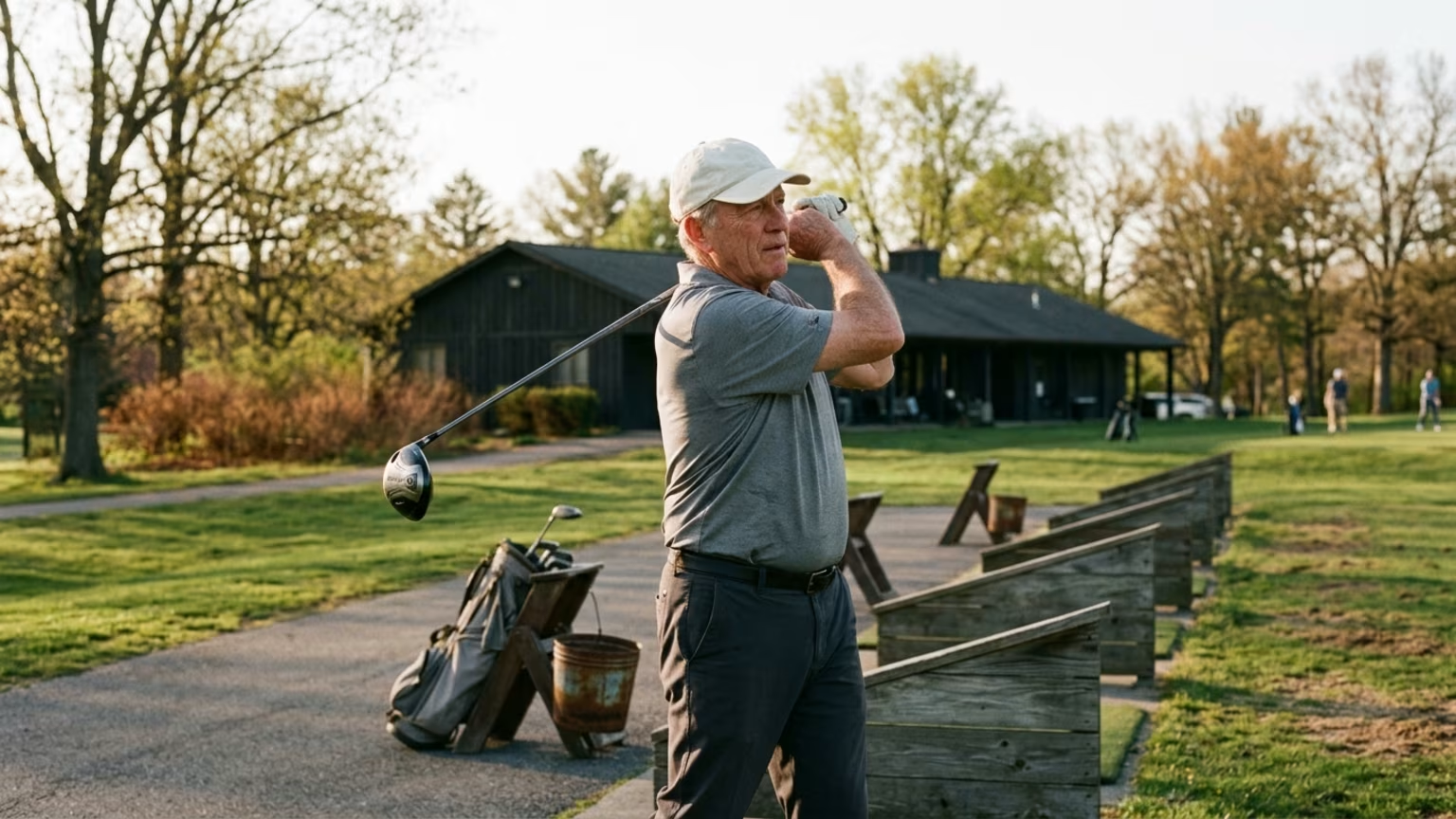

Learn why returning to golf after a long break creates a sudden workload spike and read a practical progression plan for older amateurs to protect their joints.




In 2024, a systematic review summarized by the Japan Health Golf Promotion Organization revealed a telling reality about course-related wear and tear. The report noted that amateur golfers have a lifetime musculoskeletal-injury experience rate of 56.6%. The same study showed this rate climbing to 73.5% among professional golfers. The first ambitious practice session after a long winter break is a prime time for these issues to emerge.
A long break followed by an ambitious range session creates a sharp mismatch between memory and current physical capacity. The mechanics of the swing might feel technically familiar right away. The walking, repetitive twisting, and sheer practice volume represent a sudden spike in total workload. This abrupt change in exposure catches many eager players completely off guard.
Golf is not completely safe simply because it happens at a walking pace. The organization’s summary reported 1.3 injuries per 1,000 amateur rounds. This incidence climbs to 2.5 injuries per 1,000 rounds across golfers overall. The problem is the accumulated demand on soft tissues that have not recently been exposed to heavy force.
The golf swing repeatedly loads the trunk, hips, and shoulders in a highly asymmetric pattern. Players often progress far too quickly from easy short irons to full-speed driver swings. This forceful repetition requires tissues to absorb significant energy while moving through large ranges of motion. When conditioning is insufficient, fatigue sets in quickly and the golfer might alter their posture.
A post-layoff session can easily combine prolonged standing, heavy bending, and rapid rotational repetition. The physical toll accumulates quietly during the session itself without obvious warning signs. Soreness may not appear until later that afternoon or the following morning. This delayed symptom response encourages players to underestimate the original overload and continue hitting.
Hitting balls on the range lacks the structured pacing of a normal round on the course. A player might repeat a troublesome iron swing continuously without taking a proper rest break. There is no natural pause of several minutes between shots to allow muscles to recover. The quality of the movement degrades rapidly once the primary muscles become tired.
Recreational players over 40 face a distinct threat from sudden workload spikes. A broader sports meta-analysis found that an elevated acute-to-chronic workload ratio corresponds with higher injury risk. These specific results were highly heterogeneous. The underlying principle still holds true for returning golfers.
A player who has done little mobility work for months is suddenly asking their body to perform at maximum capacity. Older amateurs often deal with gradual flare-ups rather than single traumatic events on the tee. The practical concern is lower-back stiffness or elbow pain after a surprisingly large bucket of balls. Players looking into building a weekly healthy ageing routine for golfers over 40 must respect this gradual approach.
Ignoring the transition phase places unnecessary stress on the spine and knees. Returning from a layoff requires a realistic assessment of your current physical baseline. A golfer who normally carries their bag should not assume they are ready for 18 holes immediately. Walking tolerance and swing capacity should be rebuilt together over several controlled sessions.
The goal is to avoid shocking the system with a massive day of activity. Even a short practice session can create lingering fatigue if the joints are unprepared. The rotational forces of the swing place unique demands on the wrists and elbows. When the primary muscles get tired, the smaller stabilizing tissues have to work much harder to control the club. This compensation pattern is exactly why the real reason your lower back aches after golf involves poor pacing.
A smart return-to-golf progression moves deliberately from simple walking to full-intensity play. A physical-therapy source recommends warming up dynamically and gradually increasing the number of holes or rounds each week. One golf orthopedic guide recommends starting with nine holes or a shorter practice session after a quiet offseason. This specific approach rebuilds stamina without being overly aggressive on the joints.
Begin the very first session by checking whether ordinary movement produces localized pain. A golf mobility source recommends walking first, followed by hip circles, lateral lunges, and controlled trunk turns. Make a few slow practice swings before adding any real speed to the movement. Focus entirely on turning your trail hip smoothly during these initial motions.
Once simple movements feel entirely comfortable, you can start testing partial swings. Another source recommends dynamic movements before golf and identifies hip circles, arm swings, and trunk rotations as clear examples. Progress to short pitch shots at approximately 50% effort to gauge your joint comfort. A separate mobility guide recommends choosing a small number of relevant drills and then progressing into slower practice swings.
A separate golf back-pain guide recommends recovery days and suggests limiting a range session to 40 to 60 balls when playing the next day. The objective is to reacquaint the body with the movement pattern while strictly controlling volume. Keep driver swings technically smooth rather than maximal during these early moderate sessions. A golf orthopedic guide specifically recommends separating hard range days from long walking days.
The next logical step after moderate practice is scheduling a shortened course outing. You might carry fewer clubs or use a cart if your walking capacity is uncertain. The purpose is to test the combined demands of walking, uneven lies, and waiting between shots. Do not treat this first partial round as a serious competition with a strict scorecard.
Full rounds and high-intensity practice should be the final stage of your transition. Before returning to normal play, you should be able to tolerate partial rounds without worsening symptoms. Keep the opening holes completely controlled and limit unnecessary full-effort swings early in the day. A golf injury-prevention source identifies intentional practice volume and swing adjustments when pain appears as repeatable prevention measures.
Treat your return to golf as a gradual buildup rather than a race to peak performance. A golf orthopedic guide recommends modifying your expectations after any period of inactivity or illness. This sensible pacing protects your joints from unnecessary early season strain. Monitor your body carefully and give your tissues time to adapt to the renewed workload.
Many older golfers believe that a few quick static stretches will entirely eliminate joint risk. The available golf-specific guidance emphasizes dynamic movement and progressive swing speed over standing perfectly still. Raising your body temperature with brisk walking is far more effective than isolated static holds. A golf mobility source explicitly advises warming up with five minutes of brisk walking or light jogging before pitching.
There is no universal schedule that dictates exactly when a player is completely ready for 18 holes. Returning to the sport is a conditioning process that requires careful symptom monitoring. A golf orthopedic guide also recommends avoiding painful motions and maintaining gentle movement after a layoff. If joint stiffness lingers into the next morning, you have clearly exceeded your current physical capacity.
Mild discomfort often tricks players into pushing through the pain during a practice session. One golf back-pain guide recommends reducing practice volume and increasing mobility work for mild discomfort. The same guide advises consultation with a physiotherapist or sports medicine doctor for persistent pain lasting more than two weeks. Knowing when to stop is a critical component of the smart return-to-golf protocol after time away.
Your early season sessions should focus on movement quality rather than maximum driving distance. Build your strength and mobility away from the course to support your rotational demands. Stop hitting balls before fatigue forces you to change your posture or grip. What adjustments will you make to your mobility routine this season to steer clear of this hazard?
Start your next warmup by taking five minutes to walk briskly around the practice facility.
Follow Golfergy for practical insights on performance, mobility, recovery and healthy ageing. Stay connected for new articles, research-led guidance and ideas to help you play better for longer.


Review elbow and wrist pain patterns in golf through symptom notes, practice changes, ground contact and grip condition, without assuming a quick fix.


Tiger Woods’ 2017 Dubai withdrawal offers a measured lesson for golfers over 40, with NHS guidance on when back pain needs medical attention.

Understand a stiffer golf turn, notice changes without self-diagnosis and learn when comfortable movement or individualized advice may help.
Explore practical resources on performance, recovery, mobility and golf longevity.
Read the Blog