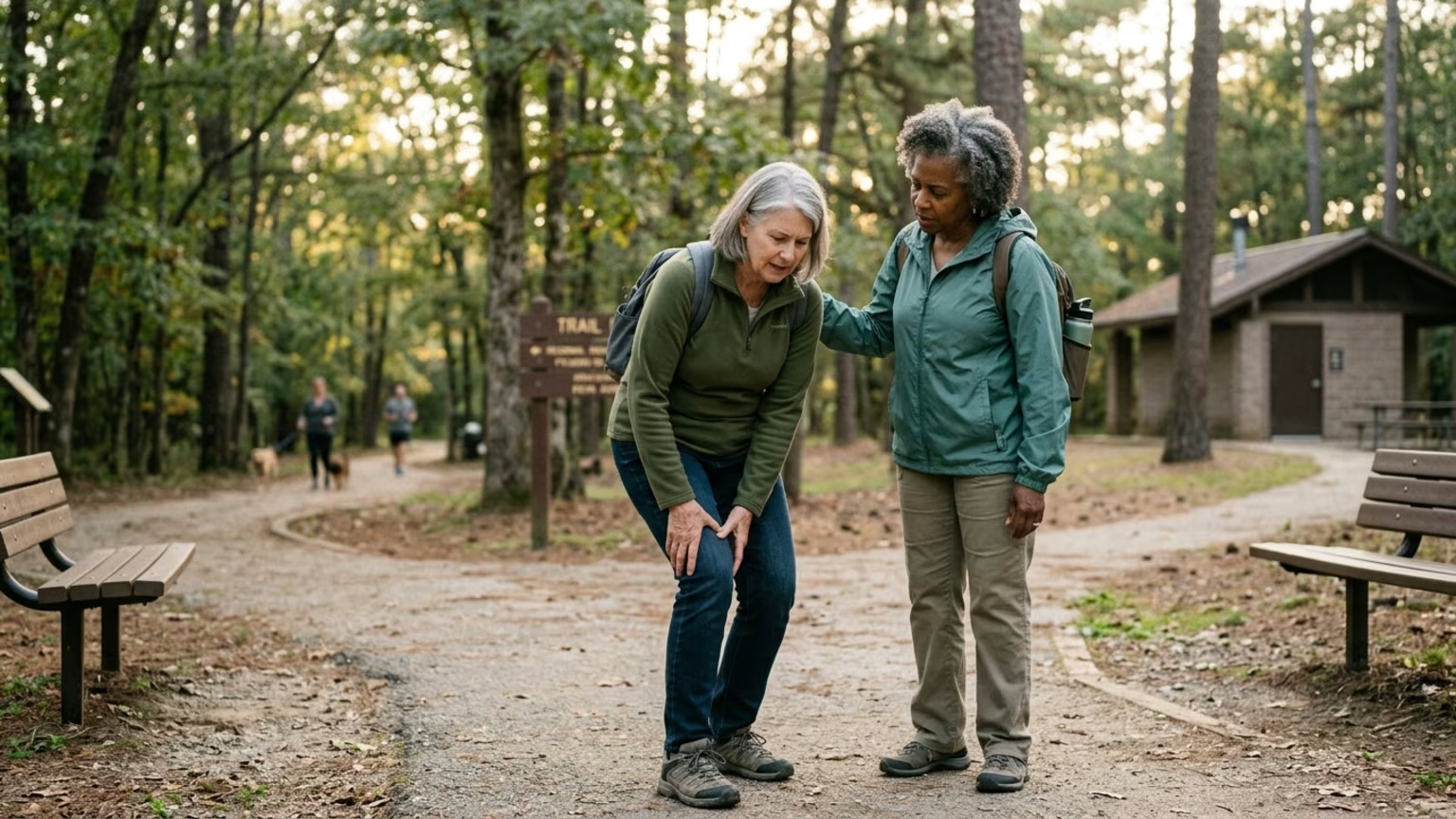

Persistent knee pain after a summer of golf might signal joint damage, not just muscle soreness. Learn why active load management beats resting for older golfers.




You just finished a grueling, sweaty 18 holes in July, and now your knee is barking as you order a drink at the clubhouse. That familiar post-round stiffness might seem like a normal part of the game for experienced players. On August 24, 2026, Daily Medi published a report revealing that persistent knee pain after summer vacations may actually reflect cartilage damage. This clinical distinction between a joint injury and ordinary muscle soreness matters immensely.
Recognizing the difference early dictates whether you spend the autumn recovering or continuing to play. Many of us try to ignore post-round swelling, assuming our bodies just need a quick rest. That assumption creates long-term mobility issues if underlying structural damage is ignored. A smart golfer understands that physical preparation and careful monitoring are necessary for continued success.
After a busy summer of golf and travel, players face a clear choice regarding physical recovery. Option A is the traditional rest-only approach, where a player simply waits for the discomfort to fade before practicing again. Option B is proactive load management, which involves targeted warm-ups, appropriate footwear, and early orthopedic assessment. We often find ourselves choosing between the two because resting feels easier in the short term.
However, the physical demands of walking the course require us to think critically about our joints. Golf is not just about the swing itself. Negotiating slopes and repeatedly loading the knee contribute heavily to fatigue. When the season peaks, this cumulative stress forces us to reevaluate our recovery habits.
Let us analyze the first option, which offers the benefit of requiring zero immediate physical effort. Daily Medi notes that typical muscle soreness tends to improve after a day or two of rest. For a minor muscular ache, taking a brief pause is entirely logical and often effective. However, this passive approach carries serious drawbacks for adults in their 40s to 60s.
During this specific period, degenerative cartilage changes may begin to occur in the body. These natural changes potentially make the knee vulnerable to relatively small impacts or repetitive loading. Relying solely on rest can mask deeper mechanical issues that require professional attention. The report warns that persistent swelling, recurring pain on stairs, or a catching sensation should prompt suspicion of cartilage damage.
Cartilage provides important shock absorption, but its limited blood supply makes spontaneous recovery from damage quite difficult. If you ignore these symptoms and just sit on the couch, you might miss a crucial window for proper care. I learned the flaws of the wait-and-see method firsthand. When I developed medial epicondylitis, commonly known as golfer's elbow, I thought I needed complete rest.
Six weeks off the course did nothing to help my arm heal. I finally learned that active recovery with a flexbar was the actual solution. It taught me that treating golf injuries requires loading the tissue properly, not just sitting on the couch and hoping for the best. Taking complete rest without investigating the root cause rarely resolves persistent pain.
This same logic applies to joint discomfort following a sudden increase in summer activity. Ignoring a swollen knee can easily turn a temporary setback into a chronic struggle. A passive approach fails to address the mechanical realities of a repetitive sport like golf. When we blindly hope for improvement, we surrender control over our longevity on the course.
Option B tackles joint health through smart preparation and active clinical guidance. The American Academy of Orthopaedic Surgeons recommends warming up properly before you begin a round. Their OrthoInfo guidance suggests stretching the shoulders, back, and legs. They also advise beginning practice with wedges before progressively moving toward full swings with longer clubs.
This progressive routine increases blood flow and muscle temperature efficiently. The AAOS explains that this process is intended to prepare the body for more intense activity. Beyond the practice tee, proactive management means adjusting your overall physical load. Daily Medi advises matching your activity volume to your personal fitness level.
They suggest taking regular breaks during hikes and wearing shock-absorbing athletic shoes. These practical measures help manage the specific strain of walking 18 holes or navigating steep terrain. Monitoring how joint movement drives pain across the golf swing can also inform how much you practice. Adjusting your habits based on these physical signals prevents excessive wear on your knees.
Early medical assessment is the cornerstone of this active strategy. If symptoms do not settle after outdoor activity, Daily Medi advises consulting an orthopedic specialist rather than waiting indefinitely. An accurate assessment, such as an MRI, can determine the extent of structural cartilage damage. The publication even discusses cartilage-preservation approaches, including autologous chondrocyte implantation.
While surgical options are not meant for the average recreational player, the focus on preserving tissue remains highly relevant. Avoiding abrupt spikes in physical activity prevents unnecessary stress on aging joints. Understanding warning signs for the ageing golfer keeps small aches from becoming season-ending problems. Gradual exposure to physical demands is vastly preferable to beginning a round cold.
By taking charge of your mobility, you can adapt your routine before an injury forces you off the course entirely. Learning how to spot joint imbalances before your opening drive means that you are adequately prepared for the physical stress ahead. If you experience a catching sensation in your knee, seek a professional opinion immediately. This proactive behavior keeps small mechanical flaws from causing permanent damage.
When comparing these two paths, active load management clearly wins the longevity tie-breaker. Taking a proactive stance does the best job of helping you play better for longer. Resting indefinitely might soothe a minor muscle ache, but it completely fails to address underlying structural changes. Proper warm-ups build resilience, while timely medical advice protects your physical foundation.
We must remember that golf is an athletic endeavor that strains the entire body. Combining a busy travel schedule with long walks creates the perfect storm for joint injuries. Using smart warm-ups to protect older golfers mitigates these cumulative stresses effectively. By respecting your physical limits and preparing properly, you maintain the mobility required to enjoy the sport.
The goal is not to stop playing, but rather to play with greater intelligence. A sudden increase in summer sports participation can quickly overload a vulnerable knee. Evaluating your movement capacity daily helps you avoid these dangerous spikes in workload. Consistent preparation means that your body can handle the rotational forces of a modern golf swing.
Option A leaves you guessing about the true nature of your discomfort. Option B equips you with the knowledge and physical readiness to navigate the season safely. Relying on hope is not a sound strategy for joint preservation. Engaging with a medical professional provides clarity and a clear roadmap for your physical recovery.
A sustainable approach to golf requires both keen self-awareness and expert guidance. If your knee exhibits recurring pain on stairs, do not try to play through the discomfort. Adjust your activity volume, stretch adequately, and listen closely to what your joints communicate. As you look back on that grueling, sweaty 18 holes from July, you will realize that a proactive mindset is your greatest asset.
Protecting your cartilage is a continuous process that extends far beyond the final putt. Taking a few extra minutes to warm up properly pays massive dividends as you age. When practicing, keep your instructions focused on one small movement at a time, such as focusing entirely on turning your trail hip. Choose simple rest for acute one-day flare-ups, and active load management for long-term swing health.
Follow Golfergy for practical insights on performance, mobility, recovery and healthy ageing. Stay connected for new articles, research-led guidance and ideas to help you play better for longer.


Review elbow and wrist pain patterns in golf through symptom notes, practice changes, ground contact and grip condition, without assuming a quick fix.


Tiger Woods’ 2017 Dubai withdrawal offers a measured lesson for golfers over 40, with NHS guidance on when back pain needs medical attention.

Understand a stiffer golf turn, notice changes without self-diagnosis and learn when comfortable movement or individualized advice may help.
Explore practical resources on performance, recovery, mobility and golf longevity.
Read the Blog


